Whether you’re heading to the vet, moving to a new home, or traveling long distance, a properly sized cat carrier is essential for your cat’s safety and comfort. Too small, and your cat will feel cramped and stressed. Too large, and your cat may slide around, increasing anxiety and injury risk.
Choosing the right cat carrier size is more important than many pet owners realize.
In this complete guide, we’ll explain how to measure your cat, select the correct carrier dimensions, and avoid common sizing mistakes.
Why Carrier Size Matters
A properly sized carrier ensures:
- Reduced travel stress
- Proper ventilation
- Safe positioning during transport
- Lower injury risk
- Easier handling
Cats naturally prefer enclosed, secure spaces. The right size makes the carrier feel like a safe den—not a trap.
Step 1: Measure Your Cat Correctly
Before buying a carrier, take accurate measurements.
You’ll need:
- A measuring tape
- A calm cat
- A flat surface
Measure Length
From the tip of the nose to the base of the tail (not including the tail itself).
Measure Height
From the floor to the top of the ears while your cat is standing naturally.
Measure Width (Optional)
Especially important for large or overweight cats.
Write down these measurements.
Ideal Carrier Size Formula
Use this general guideline:
Carrier Length = Cat Length + 2–4 inches
Carrier Height = Cat Height + 2–3 inches
This allows enough room for your cat to:
- Stand
- Turn around
- Lie down comfortably
But not so much space that they slide around.
Should a Carrier Be Tight or Spacious?
The ideal carrier is:
- Snug but not cramped
- Secure but not restrictive
Cats feel safer in smaller enclosed spaces. An oversized carrier may cause anxiety during movement.
Types of Cat Carriers
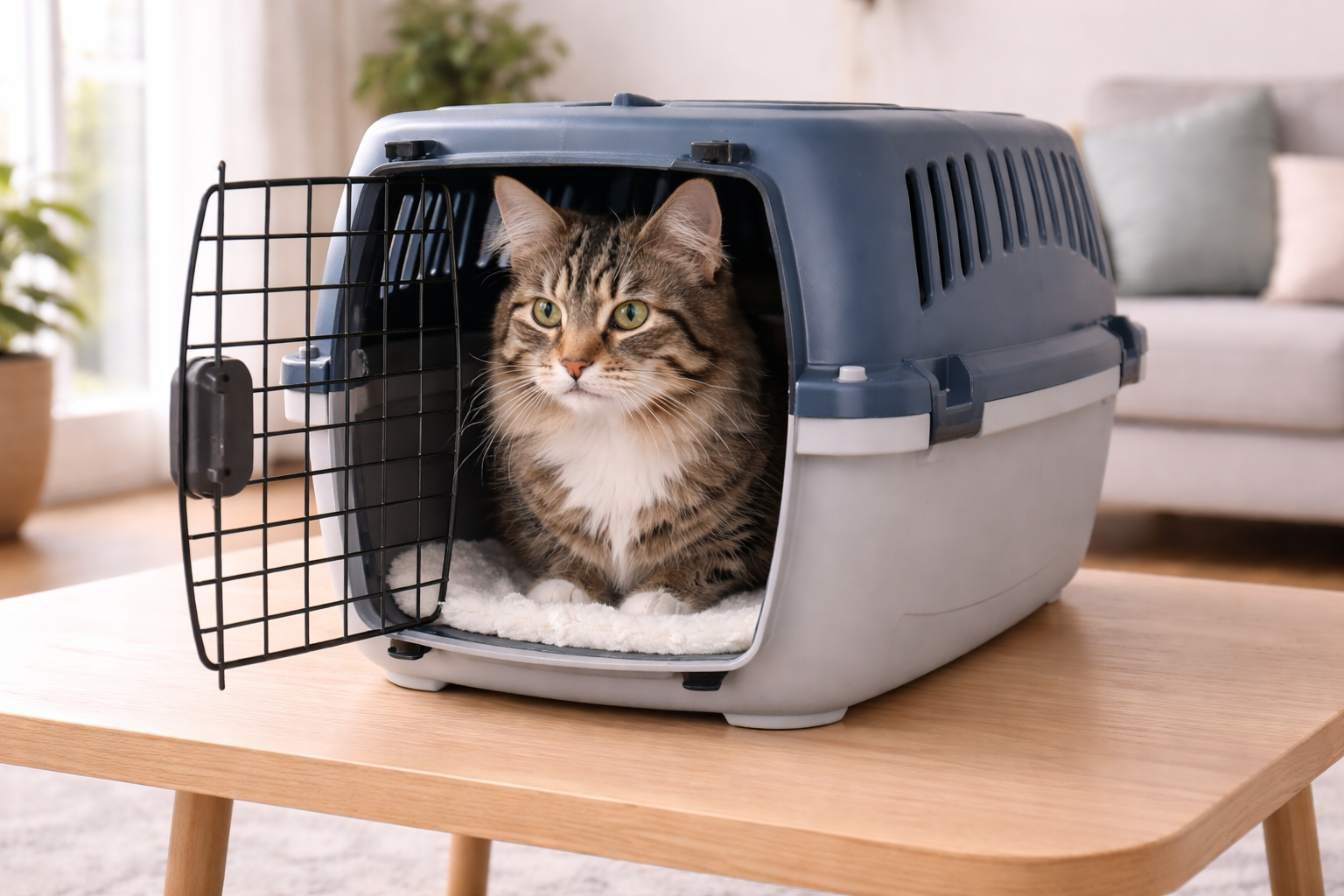
1. Hard-Sided Carriers
Best for:
- Car travel
- Vet visits
- Nervous cats
Advantages:
- Durable
- Easy to clean
- Stable structure
Sizing tip: Choose snug fit for safety during car rides.
2. Soft-Sided Carriers
Best for:
- Air travel
- Short trips
- Calm cats
Advantages:
- Lightweight
- Flexible
- Often airline-approved
Sizing tip: Ensure mesh panels allow good airflow.
3. Expandable Carriers
Some soft carriers include expandable sections for extra space when stationary.
Ideal for:
- Longer travel
- Waiting areas
- Air travel layovers
Choosing Based on Cat Size
Small Cats (Under 10 lbs)
Look for:
- Compact carriers
- Lightweight design
- 17–19 inch length
Avoid oversized carriers.
Medium Cats (10–15 lbs)
Choose:
- 19–22 inch length
- Reinforced base
- Strong zippers
Ensure width allows comfortable turning.
Large Cats (15+ lbs)
Breeds like Maine Coons require:
- 22–24+ inch carriers
- Wide doors
- Strong handles
- Heavy-duty materials
Always check weight capacity.
Carrier Size for Kittens
For growing kittens:
- Avoid buying overly large carriers
- Use a divider if possible
- Upgrade as kitten grows
Oversized carriers can increase stress.
Airline Travel Carrier Sizing
Airlines require:
- Carrier that fits under seat
- Specific dimension limits
- Soft-sided preferred
Always check airline requirements before purchase.
Signs Your Carrier Is Too Small
- Cat cannot turn around
- Head touches ceiling
- Difficulty closing door
- Visible stress or discomfort
Immediate resizing may be necessary.
Signs Your Carrier Is Too Large
- Cat slides during transport
- Difficulty stabilizing carrier
- Excess empty space
- Increased anxiety
A snug fit improves security.
Additional Features to Consider
1. Ventilation
Ensure multiple mesh panels or air holes.
2. Door Access
Front and top openings make entry easier.
3. Stability
Carrier should not tip easily.
4. Padding
Removable padded mats improve comfort.
5. Easy Cleaning
Accidents happen. Choose washable materials.
Tips to Help Your Cat Feel Comfortable
- Leave carrier out at home
- Add familiar blanket
- Use treats inside
- Avoid forcing entry
- Practice short trips
Familiarity reduces stress.
Common Mistakes When Choosing a Carrier
❌ Buying based on appearance only
❌ Ignoring weight limits
❌ Choosing oversized carriers
❌ Forgetting ventilation
❌ Not measuring your cat
Sizing mistakes can increase anxiety and risk.
When to Replace a Carrier
Replace if you notice:
- Cracks or broken latches
- Worn mesh
- Unstable base
- Broken zippers
Safety should never be compromised.
How Often Should You Use a Carrier?
Even if not traveling, occasionally place your cat in the carrier for short periods. This prevents fear when used only for vet visits.
Regular positive exposure builds comfort.
Final Thoughts
Choosing the right cat carrier size is about balance—enough space for comfort, but snug enough for security. Measuring your cat properly and understanding their needs will help you select the perfect carrier.
Whether you’re heading to the vet or flying across the country, the right carrier ensures safe, stress-free travel for both you and your cat.
A properly sized carrier doesn’t just transport your cat—it protects them.


 Accessories & Others
 Apparel
 Beds & Furniture
 Cages & Accessories
 Carriers & Strollers
 Doors, Gates & Ramps
 Flea & Tick Control
 Grooming
 Litter & Housebreaking
 Memorials & Funerary
 Accessories & Others
 Apparel
 Beds & Furniture
 Cages & Accessories
 Carriers & Strollers
 Cat Doors,Steps, Nets.
 Collars, Harnesses & leashes
 Flea & Tick Control
 Grooming
 Cages& Accessories
 Cow Mastitis Detectors
 Ear Tags
 Aquarium Accessories
 Aquarium Cleaners
 Aquarium Decor
 Aquarium Lights
 Aquarium Pumps & Filter
 Aquariums & Fish Bowls
 Automatic Feeders