Choosing the right enclosure size is one of the most important decisions in reptile care. While lighting, heating, and diet often get more attention, enclosure size directly affects a reptile’s physical health, mental well-being, and ability to behave naturally.
A tank that’s too small can lead to stress, poor appetite, weak muscles, and shortened lifespan. This guide explains how to choose the right enclosure size for your reptile, taking into account species, growth, behavior, and long-term needs.
Why Enclosure Size Matters So Much
In the wild, reptiles roam large territories, bask in open sunlight, hide when threatened, and explore their surroundings daily. In captivity, the enclosure becomes their entire world.
An enclosure that’s too small can cause:
- Chronic stress
- Inability to thermoregulate
- Poor muscle development
- Aggression or lethargy
- Increased illness risk
A properly sized enclosure allows reptiles to move, explore, bask, hide, and self-regulate—all essential for good health.
The Biggest Mistake: Buying “Starter Tanks”
One of the most common mistakes new owners make is purchasing a “starter” enclosure.
Why this is a problem:
- Reptiles grow quickly
- Frequent upgrades are stressful and expensive
- Small enclosures often limit temperature gradients
It’s almost always better to start with the enclosure size your reptile will need as an adult, not as a baby.
Step 1: Know Your Reptile’s Adult Size
Always plan based on adult length and body type, not current size.
Ask yourself:
- How long will this reptile grow?
- Is it heavy-bodied or slender?
- Does it climb, burrow, or stay ground-dwelling?
A juvenile may look comfortable now—but it won’t stay that way for long.
Step 2: Match Enclosure Size to Body Length
A widely accepted general guideline is:
- Length: Enclosure should be at least as long as the reptile’s full body length
- Width: At least half the reptile’s length
- Height: Based on climbing or basking needs
This is a minimum, not an ideal target. Larger is almost always better.
Step 3: Consider Natural Behavior
Different reptiles use space in very different ways.
Ground-Dwelling Reptiles
Examples: leopard geckos, bearded dragons
- Need more floor space than height
- Benefit from wide enclosures
Arboreal Reptiles
Examples: crested geckos, anoles
- Need vertical space
- Require tall enclosures with branches
Semi-Arboreal or Active Species
Examples: monitors, tegus
- Require both space and complexity
- Need room to roam and climb
Ignoring natural behavior leads to frustration and stress.
Step 4: Thermoregulation Needs
Reptiles rely on enclosure size to regulate body temperature.
A proper enclosure must allow:
- A warm basking area
- A cooler resting zone
- Gradual temperature transition
Small enclosures heat unevenly and make thermoregulation nearly impossible. Bigger enclosures allow safer, more stable temperature gradients.
Step 5: Space for Enrichment and Accessories
Your reptile doesn’t just need room to exist—it needs room to live.
A properly sized enclosure must fit:
- At least two hides (warm and cool side)
- Basking platforms
- Branches or climbing structures
- Water bowls
- Plants or décor
If everything feels cramped, the enclosure is too small.
Common Enclosure Size Guidelines (General)
These are minimum recommendations for adult reptiles.
- Small geckos: 20–30 gallons
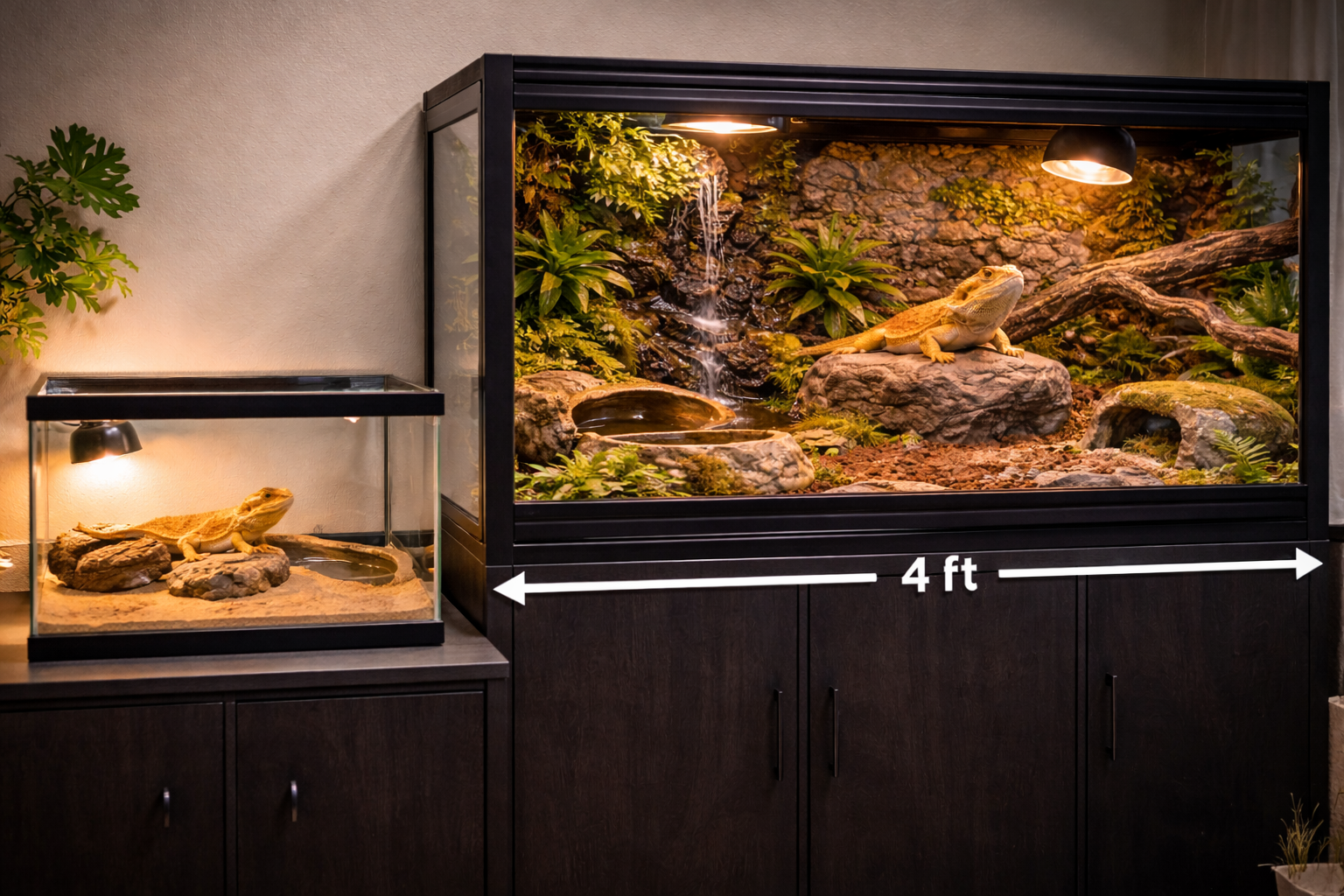
- Bearded dragons: 4×2×2 feet enclosure or larger
- Corn snakes: Length of enclosure ≥ snake length
- Arboreal geckos: Tall enclosures (18x18x24 inches or more)
When possible, go bigger than the minimum.
Bigger Enclosures Are Easier—Not Harder
Many people assume larger enclosures are harder to manage. In reality:
Benefits of larger enclosures:
- More stable temperatures
- Better humidity control
- Less stress for the reptile
- More natural behaviors
Small enclosures require constant fine-tuning, while larger ones are more forgiving.
What Happens If the Enclosure Is Too Small?
Signs your reptile may be undersized-housed:
- Constant glass surfing
- Lethargy or inactivity
- Aggression or defensiveness
- Poor appetite
- Limited basking or movement
Behavioral issues are often space issues, not personality problems.
Enclosure Size for Juveniles vs Adults
Juveniles can live in large enclosures safely if set up correctly.
Tips:
- Provide extra hides
- Ensure easy access to heat and food
- Avoid overly open layouts
There’s no evidence that large enclosures stress reptiles—lack of cover does.
Special Considerations for Multiple Reptiles
Cohabitation greatly increases enclosure size needs.
Important notes:
- Most reptiles should not be housed together
- If cohabiting, enclosure size must increase significantly
- Watch for dominance and stress behaviors
When in doubt, house reptiles separately.
Glass Tanks vs Front-Opening Enclosures
Size isn’t just about volume—it’s about usability.
Front-opening enclosures:
- Reduce stress during access
- Allow easier placement of décor
- Often provide better usable space
Tall or wide enclosures are usually better than narrow ones with the same volume.
Planning for the Long Term
Reptiles can live 10–30+ years depending on species.
Ask yourself:
- Will this enclosure still work in 5–10 years?
- Can I comfortably maintain it long-term?
A good enclosure is an investment in your reptile’s entire life.
Quick Enclosure Size Checklist
Before choosing an enclosure:
- ✔ Based on adult size
- ✔ Supports natural behavior
- ✔ Allows temperature gradient
- ✔ Fits enrichment and hides
- ✔ Larger than minimum if possible
If any box is unchecked, size up.
Final Thoughts
Choosing the right enclosure size for your reptile isn’t about meeting minimum standards—it’s about creating an environment where your reptile can thrive. Space allows reptiles to move naturally, regulate body temperature, reduce stress, and live healthier, longer lives.
If you’re ever unsure between two enclosure sizes, choose the larger one. You’ll find it easier to manage, and your reptile will benefit from the extra room every single day.