Choosing the right filter for your fish tank is one of the most important decisions you’ll make as an aquarium owner. A good filter keeps the water clean, removes harmful toxins, and creates a healthy environment where your fish can thrive. With so many options available, it’s easy to feel overwhelmed—especially if you’re a beginner. Don’t worry. This guide will walk you through everything you need to know to confidently pick the perfect filter for your aquarium.
Why a Fish Tank Filter Is Essential
Fish constantly produce waste, leftover food breaks down, and plants shed organic matter. Without filtration, these wastes quickly turn into toxic ammonia and nitrites, which can seriously harm or kill fish. A proper aquarium filter:
- Removes debris and uneaten food
- Supports beneficial bacteria for biological filtration
- Improves water clarity and oxygen circulation
- Reduces the frequency of water changes
In short, a filter is the heart of a healthy fish tank.
Understanding the Three Types of Filtration
Most aquarium filters work using one or more of the following filtration methods:
1. Mechanical Filtration
This removes solid debris like fish waste and food particles. Sponges, filter pads, or floss trap these particles, keeping the water clear.
2. Biological Filtration
Beneficial bacteria grow on filter media and convert toxic ammonia into less harmful nitrates. This is the most critical type of filtration for fish health.
3. Chemical Filtration
Activated carbon or similar media remove odors, discoloration, and dissolved impurities from the water. While useful, chemical filtration is optional in many tanks.
The best filters combine mechanical and biological filtration, with chemical filtration as a bonus.
Common Types of Aquarium Filters
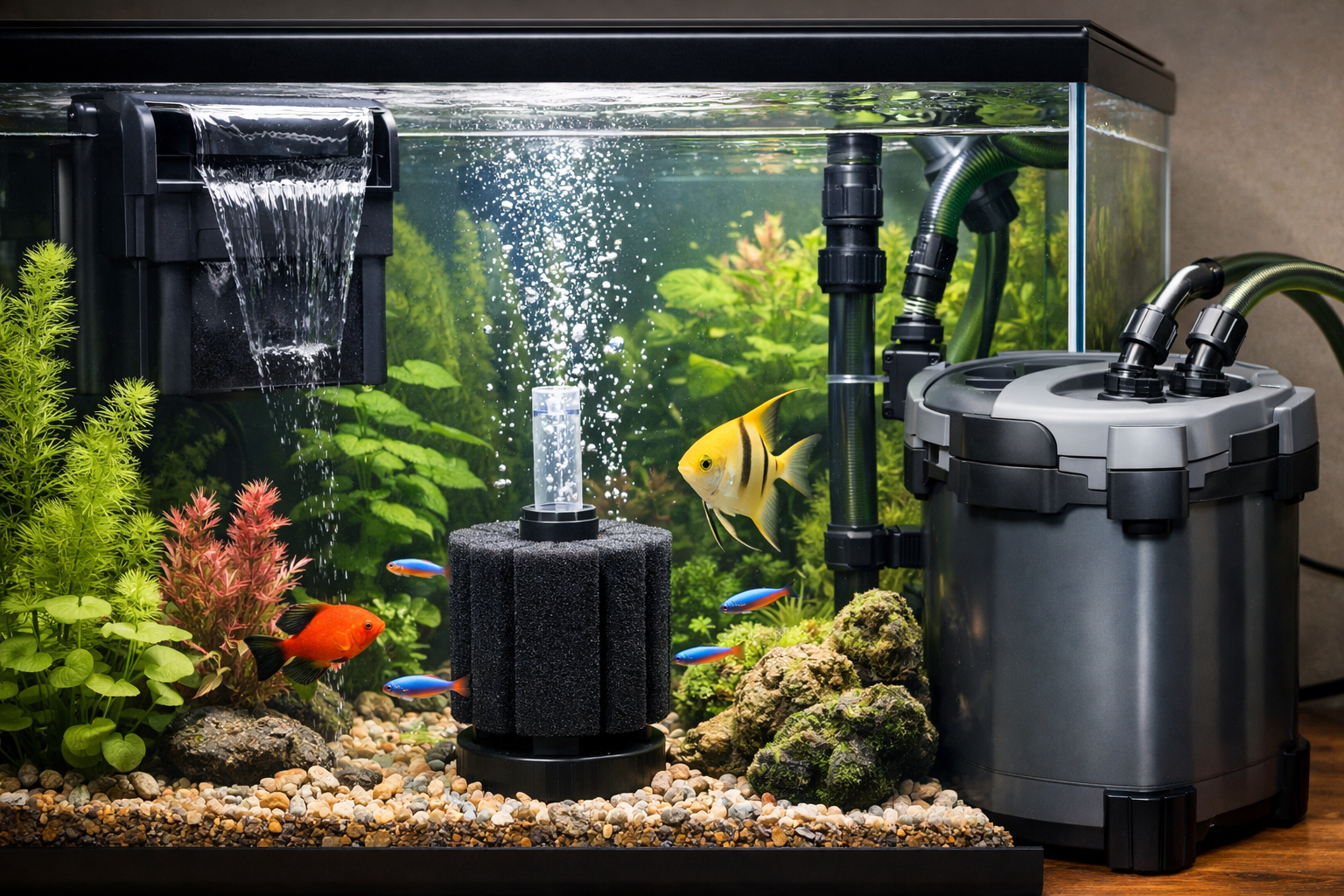
Hang-On-Back (HOB) Filters
These filters hang on the back of the tank and are extremely popular for beginners.
Pros:
- Easy to install and maintain
- Affordable and widely available
- Suitable for small to medium tanks
Cons:
- Can be noisy
- Visible from outside the tank
Canister Filters
Canister filters sit outside the tank and connect via hoses.
Pros:
- Excellent filtration power
- Ideal for large tanks
- Customizable filter media
Cons:
- More expensive
- Slightly complex to set up
Sponge Filters
These air-powered filters use a sponge to trap debris and grow beneficial bacteria.
Pros:
- Very gentle water flow
- Perfect for fry and shrimp tanks
- Inexpensive
Cons:
- Limited mechanical filtration
- Not ideal for large or heavily stocked tanks
Internal Filters
Placed inside the aquarium, these filters are compact and efficient.
Pros:
- Good for small tanks
- Easy to hide behind decorations
Cons:
- Take up internal tank space
- Less powerful than canister filters
Choose a Filter Based on Tank Size
Filter capacity is usually measured in gallons per hour (GPH). A general rule is to choose a filter that can cycle all the water in your tank 4–6 times per hour.
- 10-gallon tank → 40–60 GPH
- 20-gallon tank → 80–120 GPH
- 50-gallon tank → 200–300 GPH
For heavily stocked tanks, go slightly higher.
Consider Your Fish Species
Different fish have different needs:
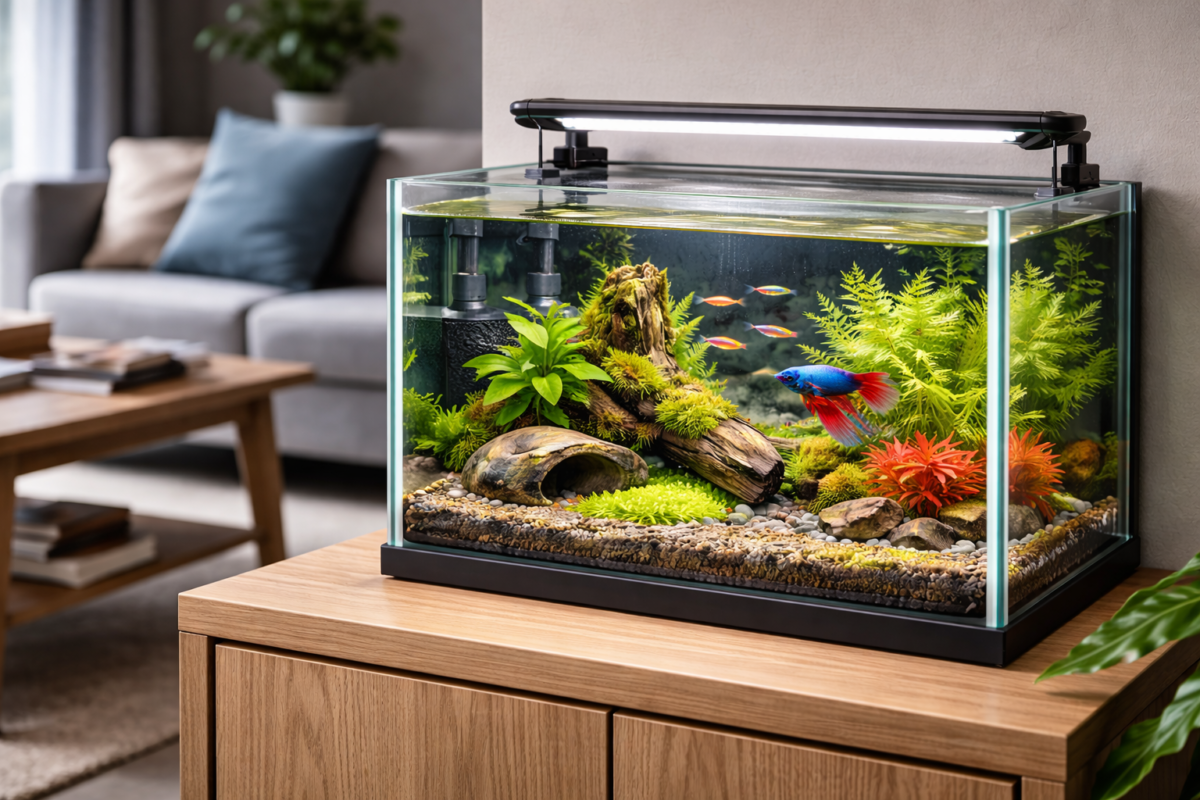
- Betta fish: Prefer low-flow filters like sponge or adjustable HOB filters
- Goldfish: Produce heavy waste and need strong filtration
- Tropical community fish: Most do well with HOB or canister filters
- Shrimp and fry: Gentle sponge filters prevent accidental suction
Always match the filter’s water flow to your fish’s comfort level.
Maintenance and Ease of Use
A filter is only effective if you maintain it properly. Before buying, ask yourself:
- How often does the filter media need cleaning?
- Are replacement parts easy to find?
- Can the flow rate be adjusted?
Choose a filter that fits your lifestyle. Simple, low-maintenance filters are better for beginners.
Noise Level and Power Consumption
Some filters can be surprisingly loud. If your aquarium is in a bedroom or office, look for filters labeled as “quiet” or “silent operation.” Energy-efficient filters also help reduce electricity costs over time.
Budget vs. Long-Term Value
While it’s tempting to buy the cheapest filter available, investing in a quality filter often saves money in the long run. Better filters last longer, perform more consistently, and protect your fish from health issues caused by poor water quality.
Final Thoughts
Choosing the right filter for your fish tank doesn’t have to be complicated. Focus on your tank size, fish species, and maintenance preferences. A well-chosen filter keeps your aquarium clean, your fish healthy, and your hobby enjoyable. When in doubt, it’s always better to slightly over-filter than under-filter. Your fish will thank you for it.
With the right filter in place, you’re well on your way to building a beautiful, thriving aquarium. 🐠✨


 Accessories & Others
 Apparel
 Beds & Furniture
 Cages & Accessories
 Carriers & Strollers
 Doors, Gates & Ramps
 Flea & Tick Control
 Grooming
 Litter & Housebreaking
 Memorials & Funerary
 Accessories & Others
 Apparel
 Beds & Furniture
 Cages & Accessories
 Carriers & Strollers
 Cat Doors,Steps, Nets.
 Collars, Harnesses & leashes
 Flea & Tick Control
 Grooming
 Cages& Accessories
 Cow Mastitis Detectors
 Ear Tags
 Aquarium Accessories
 Aquarium Cleaners
 Aquarium Decor
 Aquarium Lights
 Aquarium Pumps & Filter
 Aquariums & Fish Bowls
 Automatic Feeders