Humidity is one of the most critical—and often misunderstood—elements of terrarium care. While temperature gets most of the attention, incorrect humidity levels can quietly cause serious health issues, including dehydration, shedding problems, respiratory infections, and even organ failure.
This guide explains how to maintain proper humidity in a terrarium, why it matters, and how to adjust it safely for reptiles and amphibians of different habitats.
Why Humidity Matters for Reptiles and Amphibians
Humidity affects far more than comfort. It directly influences:
- Skin health and shedding
- Respiratory function
- Hydration levels
- Activity and appetite
- Immune system strength
In nature, reptiles and amphibians live in carefully balanced environments. In captivity, even small humidity errors can disrupt those natural processes.
Understanding Humidity Requirements by Species
Not all reptiles need the same humidity levels.
Low-Humidity Species (Desert & Arid)
- Bearded dragons
- Leopard geckos
- Corn snakes
These species require dry conditions with localized humid hides.
Moderate-Humidity Species
- Ball pythons
- Crested geckos
- Blue-tongue skinks
They need stable humidity with periodic increases.
High-Humidity Species (Tropical & Amphibians)
- Tree frogs
- Dart frogs
- Chameleons
These animals rely on consistently high humidity and frequent moisture.
Always research your species’ specific humidity range, not general guidelines.
Essential Tools for Humidity Control
Hygrometer (Non-Negotiable)
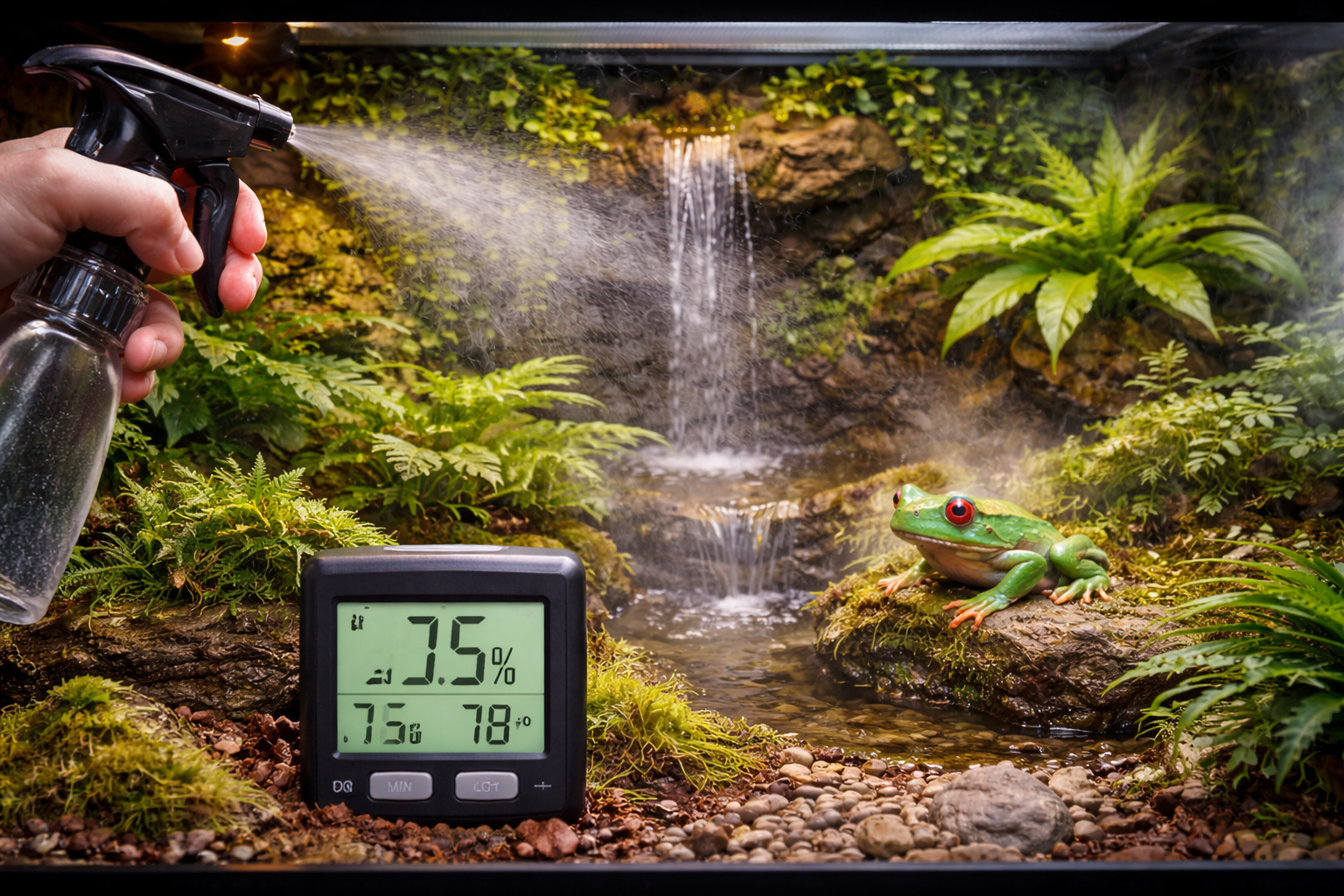
A hygrometer measures humidity levels inside the enclosure.
Tips:
- Use digital hygrometers for accuracy
- Place probes at mid-level, not directly over water
- Monitor daily
Guessing humidity is one of the most common beginner mistakes.
Proper Ventilation
Humidity must be controlled, not trapped.
- Too little ventilation causes mold and bacteria
- Too much ventilation dries the enclosure
Screen tops, adjustable vents, or partial covers help strike the right balance.
Effective Ways to Increase Humidity
1. Misting
Misting is the most common method of humidity control.
- Hand misting works for small enclosures
- Automatic misting systems provide consistency
- Use dechlorinated or filtered water
Mist frequency depends on species and enclosure size.
2. Substrate Selection
Substrate plays a huge role in moisture retention.
Humidity-friendly substrates include:
- Coconut fiber
- Cypress mulch
- Sphagnum moss
- Bioactive soil mixes
Avoid dry substrates for tropical species.
3. Water Bowls and Features
Open water sources naturally increase humidity.
Options include:
- Large shallow bowls
- Drip systems
- Small waterfalls (for amphibians)
Always clean water sources regularly to prevent bacteria growth.
4. Live Plants
Live plants help stabilize humidity naturally.
Benefits:
- Moisture retention
- Improved air quality
- Reduced stress
Choose non-toxic plants suited to the enclosure’s conditions.
How to Reduce Excess Humidity
Too much humidity can be just as dangerous as too little.
Signs of Excess Humidity
- Condensation on glass
- Mold growth
- Constantly wet substrate
- Lethargy or respiratory symptoms
Solutions
- Increase ventilation
- Reduce misting frequency
- Replace overly damp substrate
- Lower water surface area
Balance is key.
Creating Humidity Zones
Not all parts of the enclosure need the same moisture level.
Humidity zones allow reptiles to self-regulate:
- A humid hide on the warm side
- Drier areas for basking
- Moist corners for shedding
This setup closely mimics natural environments.
Humidity and Shedding Problems
One of the clearest signs of improper humidity is abnormal shedding.
Low humidity can cause:
- Retained shed on toes or tail
- Eye caps not releasing
- Patchy or incomplete sheds
Maintaining correct humidity often resolves shedding issues without intervention.
Special Considerations for Amphibians
Amphibians are especially sensitive because they absorb moisture through their skin.
Key points:
- Never allow enclosures to dry out
- Use dechlorinated water only
- Avoid harsh airflow or heat
Even brief humidity drops can cause stress or injury.
Seasonal and Environmental Changes
Room conditions affect terrarium humidity.
Watch for changes during:
- Winter heating seasons (dry air)
- Summer humidity spikes
- Air conditioner use
Adjust misting and ventilation accordingly.
Common Humidity Mistakes
New keepers often struggle with:
- No hygrometer
- Over-misting without airflow
- Using incorrect substrate
- Ignoring seasonal changes
- Applying one humidity level to all species
Correcting these mistakes dramatically improves animal health.
Daily Humidity Maintenance Routine
A simple routine keeps conditions stable:
- Check hygrometer readings daily
- Spot-check substrate moisture
- Refill and clean water bowls
- Adjust misting as needed
Consistency matters more than perfection.
Final Thoughts
Maintaining proper humidity in a terrarium is about precision, observation, and balance. When humidity matches a species’ natural habitat, reptiles shed cleanly, breathe easily, and display normal behavior.
Humidity problems rarely appear overnight—but when they do, the effects can be severe. By monitoring conditions, choosing the right materials, and responding quickly to changes, you create a stable environment where reptiles and amphibians truly thrive.
Your terrarium isn’t just a display—it’s a living climate system. Manage it carefully, and your animals will reward you with long-term health and vitality.


 Accessories & Others
 Apparel
 Beds & Furniture
 Cages & Accessories
 Carriers & Strollers
 Doors, Gates & Ramps
 Flea & Tick Control
 Grooming
 Litter & Housebreaking
 Memorials & Funerary
 Accessories & Others
 Apparel
 Beds & Furniture
 Cages & Accessories
 Carriers & Strollers
 Cat Doors,Steps, Nets.
 Collars, Harnesses & leashes
 Flea & Tick Control
 Grooming
 Cages& Accessories
 Cow Mastitis Detectors
 Ear Tags
 Aquarium Accessories
 Aquarium Cleaners
 Aquarium Decor
 Aquarium Lights
 Aquarium Pumps & Filter
 Aquariums & Fish Bowls
 Automatic Feeders