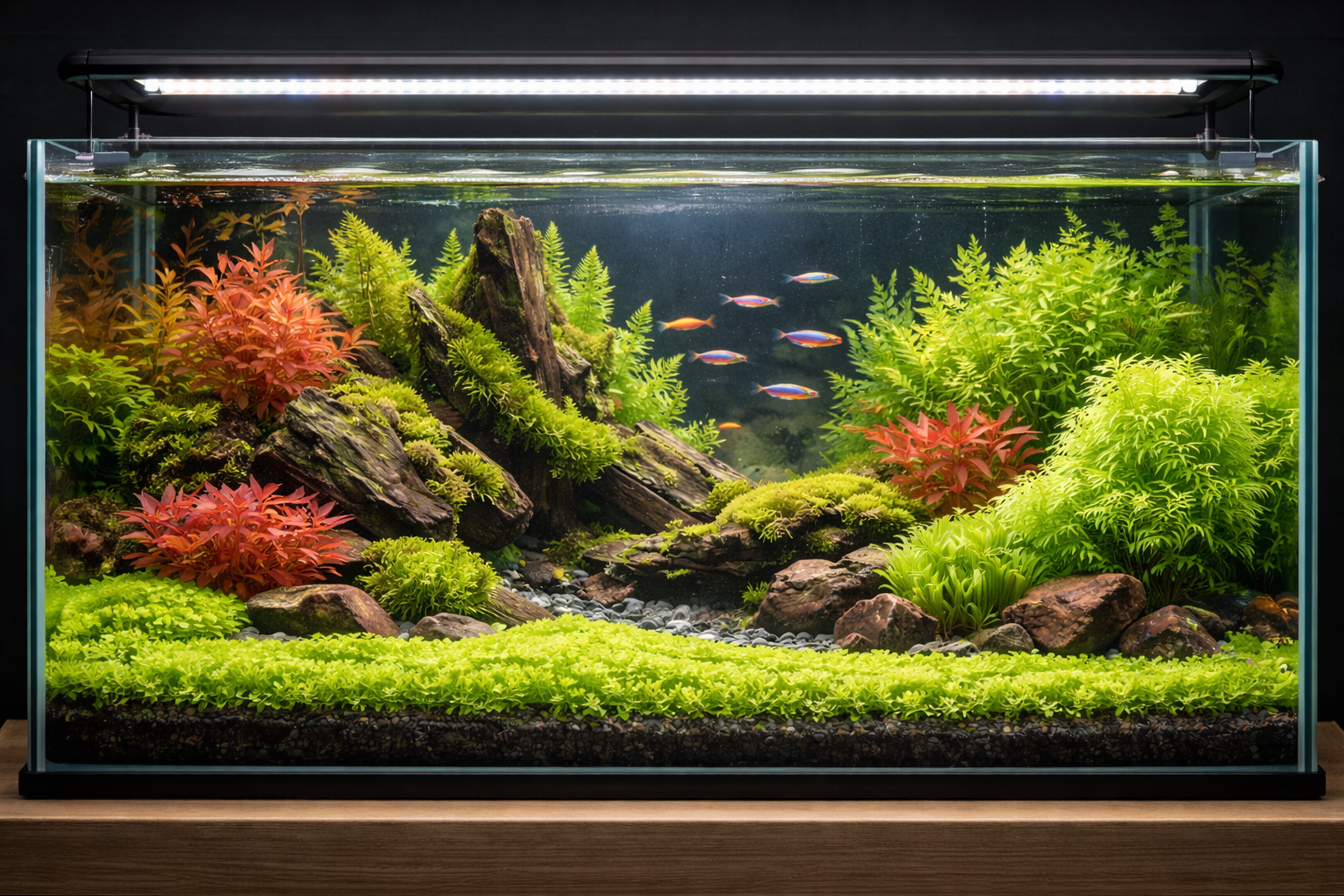
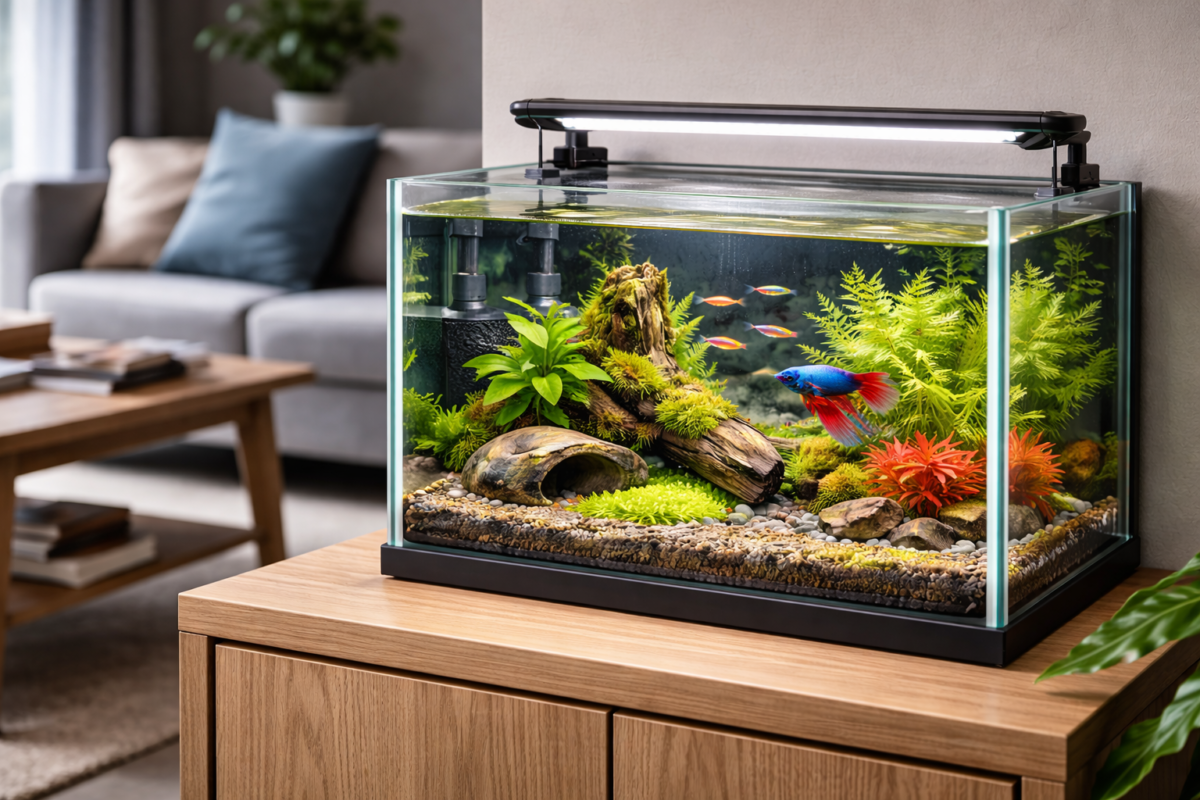
Algae is one of the most common problems aquarium owners face. A little algae is normal and even healthy — but when it takes over your glass, decorations, and plants, it becomes frustrating.
The good news? You don’t need harsh chemicals to control it.
In this complete guide, you’ll learn how to prevent algae growth naturally using simple, safe, and effective methods that keep your tank balanced and beautiful.
Why Does Algae Grow in Aquariums?
Algae grows when three things are present:
- Light
- Nutrients (especially nitrates and phosphates)
- Water
Since aquariums naturally have all three, algae growth is inevitable. The key is controlling imbalance.
Fish like Goldfish and Guppy produce waste that increases nutrient levels, which fuels algae.
1. Control Lighting Duration
Lighting is the biggest trigger for algae outbreaks.
Ideal Lighting Time:
- 6–8 hours per day for most tanks
- 8–10 hours for heavily planted aquariums
Anything beyond 10 hours significantly increases algae risk.
Use a Timer
A simple timer ensures consistent light cycles.
Avoid:
- Leaving lights on overnight
- Turning lights on and off randomly
Consistency keeps algae under control.
Avoid Direct Sunlight
Placing your tank near a window invites algae problems. Natural sunlight is unpredictable and intense.
Keep your aquarium away from direct sun exposure.
2. Maintain Proper Feeding Habits
Overfeeding is one of the biggest causes of algae.
Uneaten food decomposes and increases:
- Ammonia
- Nitrites
- Nitrates
Feed only what fish can consume in 30–60 seconds.
Fish like Betta fish require very small portions. Overfeeding them quickly clouds water.
3. Perform Regular Water Changes
Water changes remove excess nutrients naturally.
Recommended Schedule:
- 20–30% weekly water change
- Gravel vacuum during each change
This prevents nitrate buildup — a major algae fuel source.
4. Add Live Plants
Live plants compete with algae for nutrients.
They absorb:
- Nitrates
- Phosphates
- Excess minerals
Fast-growing plants are especially helpful.
Good beginner plants include:
- Java Fern
- Anubias
- Amazon Sword
In planted aquariums, algae struggles to dominate when plants are healthy.
5. Improve Water Circulation
Poor flow creates stagnant areas where algae thrives.
Ensure:
- Filter output reaches all corners
- No dead spots behind decorations
- Adequate oxygenation
Balanced circulation distributes nutrients evenly.
6. Keep a Balanced Fish Population
Overstocked tanks produce more waste.
Follow general stocking guidelines:
- 1 inch of fish per gallon (basic rule)
Fish like Angelfish require more space due to size and waste production.
Avoid overcrowding to reduce nutrient overload.
7. Introduce Natural Algae Eaters
Some fish and invertebrates help control algae naturally.
Popular options include:
- Siamese algae eater
- Otocinclus
- Nerite snail
They won’t eliminate algae entirely but help manage it.
8. Avoid Excess Nutrient Build-Up
Test water regularly for:
If nitrates exceed 40 ppm, increase water change frequency.
9. Clean Filter Media Properly
Never wash filter sponges with tap water.
Rinse them in tank water to preserve beneficial bacteria.
Healthy bacteria break down waste before it becomes algae fuel.
10. Balance CO2 and Light (For Planted Tanks)
In high-tech planted aquariums:
- Too much light without CO2 = algae
- Too little CO2 with strong fertilizer = imbalance
Lighting, CO2, and nutrients must stay in harmony.
Common Types of Aquarium Algae
Understanding algae helps prevent it.
Green Spot Algae
Small green dots on glass — often from excess light.
Brown Algae (Diatoms)
Common in new tanks.
Hair Algae
Long strands caused by nutrient imbalance.
Black Beard Algae
Stubborn and linked to inconsistent CO2.
Natural Algae Prevention Checklist
✔ Limit lighting to 6–8 hours
✔ Avoid direct sunlight
✔ Feed properly
✔ Weekly water changes
✔ Add live plants
✔ Maintain filter health
✔ Avoid overstocking
✔ Test water regularly
Consistency is key.
What NOT to Do
❌ Don’t rely on chemical algae killers
❌ Don’t scrub aggressively daily
❌ Don’t completely sterilize your tank
❌ Don’t ignore nutrient testing
Quick fixes often cause bigger long-term problems.
How Long Does Natural Algae Control Take?
If you correct the imbalance:
- Light algae improves within 1–2 weeks
- Severe outbreaks may take 3–4 weeks
Patience is essential.
Final Thoughts
Algae is not the enemy — imbalance is.
When you control:
- Lighting
- Nutrients
- Feeding
- Water changes
Algae becomes manageable and even minimal.
Natural prevention is safer, healthier, and more sustainable than chemical treatments. By following these methods, you’ll enjoy a clean, clear, and vibrant aquarium without constant scrubbing.


 Accessories & Others
 Apparel
 Beds & Furniture
 Cages & Accessories
 Carriers & Strollers
 Doors, Gates & Ramps
 Flea & Tick Control
 Grooming
 Litter & Housebreaking
 Memorials & Funerary
 Accessories & Others
 Apparel
 Beds & Furniture
 Cages & Accessories
 Carriers & Strollers
 Cat Doors,Steps, Nets.
 Collars, Harnesses & leashes
 Flea & Tick Control
 Grooming
 Cages& Accessories
 Cow Mastitis Detectors
 Ear Tags
 Aquarium Accessories
 Aquarium Cleaners
 Aquarium Decor
 Aquarium Lights
 Aquarium Pumps & Filter
 Aquariums & Fish Bowls
 Automatic Feeders