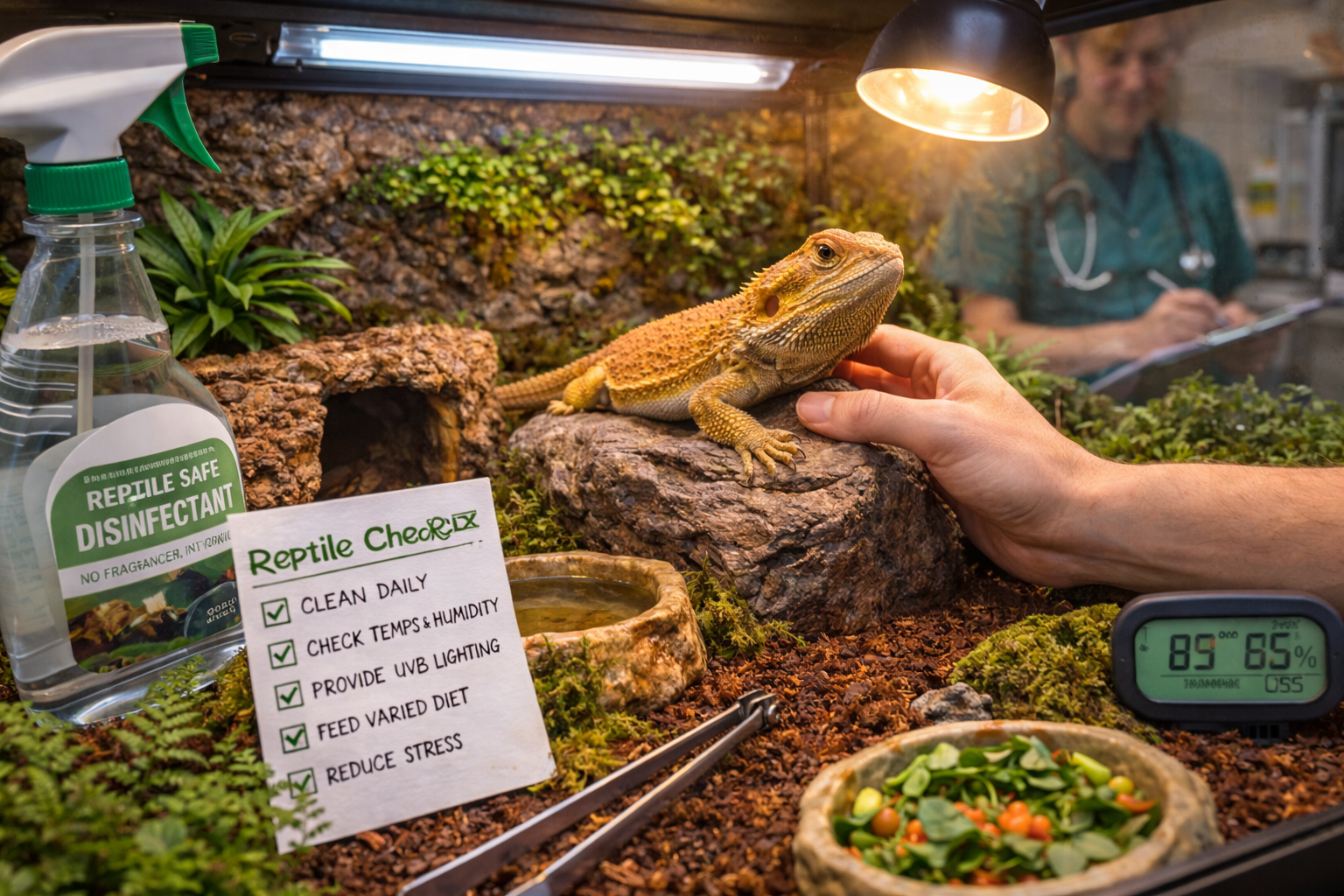
Reptiles are resilient animals, but they are also highly sensitive to their environment. Most reptile illnesses don’t appear suddenly—they develop slowly due to improper care, stress, or poor hygiene. The good news? Most common reptile diseases are completely preventable with the right setup and daily habits.
This guide explains how to prevent common reptile diseases, what causes them, and the best practices every reptile owner should follow to ensure long-term health.
Why Disease Prevention Is So Important in Reptiles
Unlike mammals, reptiles instinctively hide signs of illness. By the time symptoms are obvious, the disease may already be advanced.
Preventative care helps:
Avoid costly veterinary treatments
Reduce stress and suffering
Extend lifespan
Maintain natural behavior and appetite
A healthy reptile is the result of consistent care, not emergency treatment.
1. Maintain Proper Temperature and Humidity
Incorrect temperature and humidity are the leading causes of reptile illness.
Why It Matters
Low temperatures impair digestion and immunity
High humidity can cause respiratory infections
Low humidity leads to dehydration and shedding problems
Prevention Tips
Create a temperature gradient (warm and cool zones)
Use accurate thermometers and hygrometers
Research species-specific requirements
Never guess environmental conditions—measure them.
2. Provide Correct UVB Lighting
One of the most preventable reptile diseases is metabolic bone disease (MBD), caused by lack of UVB.
UVB Prevents:
Bone deformities
Muscle weakness
Tremors and paralysis
Best Practices
Use species-appropriate UVB bulbs
Replace UVB bulbs every 6–12 months
Ensure no glass or plastic blocks the light
UVB lighting is not optional—it’s essential.
3. Feed a Balanced, Species-Appropriate Diet
Improper nutrition weakens the immune system and causes long-term damage.
Common Diet-Related Issues
Vitamin and mineral deficiencies
Obesity
Digestive problems
Prevention Tips
Feed according to species and age
Use calcium and vitamin supplements as needed
Gut-load feeder insects
Avoid feeding inappropriate foods
Never assume one reptile’s diet works for another.
4. Keep the Enclosure Clean
Dirty enclosures are breeding grounds for bacteria, parasites, and fungi.
Diseases Linked to Poor Hygiene
Skin infections
Parasites
Respiratory illness
Cleaning Routine
Spot-clean waste daily
Change water daily
Deep-clean monthly
Clean environments equal strong immune systems.
5. Quarantine New Reptiles
Introducing a new reptile without quarantine is a major risk.
Why Quarantine Is Critical
Prevents parasite spread
Reduces disease transmission
Allows observation of health issues
Quarantine Guidelines
Isolate new reptiles for 30–60 days
Use simple, easy-to-clean setups
Monitor feeding, behavior, and waste
Never rush introductions.
6. Reduce Stress as Much as Possible
Stress weakens a reptile’s immune system faster than almost anything else.
Common Stressors
Overhandling
Loud environments
Improper enclosure size
Lack of hiding places
Stress Prevention
Provide at least two secure hides
Handle only when necessary
Maintain consistent routines
A calm reptile is a healthy reptile.
7. Watch for Early Warning Signs
Early detection can save lives.
Signs of Potential Illness
Loss of appetite
Lethargy
Weight loss
Abnormal shedding
Labored breathing
Daily observation helps catch problems before they worsen.
8. Prevent Parasites
Parasites are common, especially in wild-caught or improperly housed reptiles.
Parasite Prevention Tips
Buy captive-bred reptiles
Maintain enclosure hygiene
Quarantine new animals
Schedule fecal exams if needed
Healthy environments discourage parasite growth.
9. Avoid Unsafe Products and Décor
Some products sold for reptiles are actually harmful.
Avoid:
Heat rocks
Chemically treated wood
Pine or cedar substrates
Harsh cleaning chemicals
Always choose reptile-safe materials.
10. Schedule Regular Veterinary Checkups
Even healthy reptiles benefit from occasional vet visits.
Why Vet Visits Matter
Early disease detection
Parasite screening
Professional care advice
Find an exotic veterinarian before emergencies occur.
Common Reptile Diseases and Their Causes
Disease
Common Cause
Metabolic Bone Disease
Lack of UVB/calcium
Respiratory Infection
Poor humidity/temperature
Mouth Rot
Dirty enclosure, stress
Parasites
Poor hygiene, no quarantine
Shedding Issues
Low humidity, dehydration
Most of these are 100% preventable with proper care.
Simple Daily Habits That Prevent Disease
Check temperature and humidity
Observe behavior and appetite
Remove waste promptly
Refresh water bowls
Inspect skin and eyes
Consistency matters more than perfection.
Final Thoughts
Preventing common reptile diseases isn’t complicated—but it does require attention, education, and routine care. The vast majority of reptile health issues stem from husbandry mistakes, not bad luck.
By maintaining proper environmental conditions, providing balanced nutrition, minimizing stress, and keeping enclosures clean, you dramatically reduce the risk of illness. Prevention not only saves money—it protects your reptile from unnecessary suffering.
A healthy reptile is active, alert, and comfortable in its environment. Give them the right care, and they’ll reward you with years of fascinating, stress-free companionship.


 Accessories & Others
 Apparel
 Beds & Furniture
 Cages & Accessories
 Carriers & Strollers
 Doors, Gates & Ramps
 Flea & Tick Control
 Grooming
 Litter & Housebreaking
 Memorials & Funerary
 Accessories & Others
 Apparel
 Beds & Furniture
 Cages & Accessories
 Carriers & Strollers
 Cat Doors,Steps, Nets.
 Collars, Harnesses & leashes
 Flea & Tick Control
 Grooming
 Cages& Accessories
 Cow Mastitis Detectors
 Ear Tags
 Aquarium Accessories
 Aquarium Cleaners
 Aquarium Decor
 Aquarium Lights
 Aquarium Pumps & Filter
 Aquariums & Fish Bowls
 Automatic Feeders