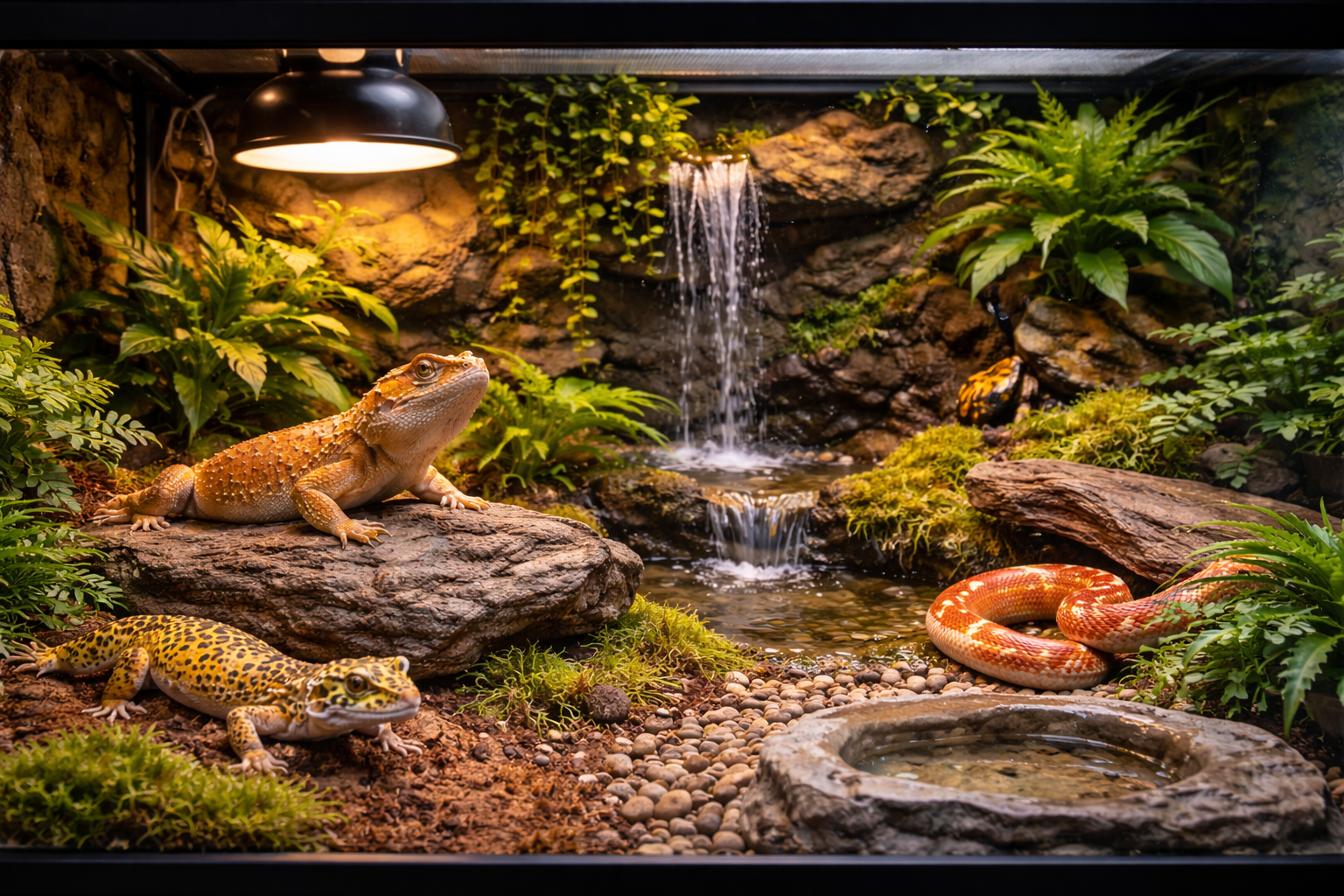
A terrarium is more than just a glass enclosure—it’s a complete living ecosystem for your reptile or amphibian. When set up correctly, it supports natural behaviors, reduces stress, and promotes long-term health. When done poorly, it can quickly lead to illness, poor appetite, and even premature death.
Whether you’re a beginner or upgrading an existing enclosure, this guide will walk you through how to set up the perfect terrarium, step by step, using proven husbandry principles.
Step 1: Choose the Right Terrarium Size
One of the most common mistakes is starting with an enclosure that’s too small.
A perfect terrarium should:
- Allow natural movement (walking, climbing, burrowing)
- Support a temperature gradient
- Include space for hides, décor, and feeding areas
As a general rule, bigger is always better. Even small reptiles benefit from extra space, which allows better heat distribution and reduces stress.
Step 2: Match the Terrarium to the Species
Not all terrariums are the same. The species you keep determines the layout.
- Desert species need dry, open spaces and strong basking zones
- Tropical species require vertical space, plants, and high humidity
- Burrowing species need deep, soft substrate
- Arboreal species thrive in tall enclosures with branches
Research your species’ natural habitat and replicate it as closely as possible.
Step 3: Install Proper Heating
Reptiles and amphibians rely on external heat to regulate their bodies.
Key heating principles:
- Create a warm side and cool side
- Use overhead heat lamps or ceramic heaters
- Avoid heat rocks, which can cause burns
- Always use a thermostat to prevent overheating
Place thermometers on both sides of the enclosure to ensure accurate temperature control.
Step 4: Provide Correct Lighting and UVB
Lighting is essential—not just for visibility, but for health.
Most reptiles require:
- UVB lighting to metabolize calcium
- A consistent day/night light cycle
- Proper bulb strength based on species
UVB bulbs should be replaced every 6–12 months, even if they still emit visible light. Inadequate UVB is a leading cause of metabolic bone disease.
Step 5: Control Humidity Levels
Humidity is just as important as temperature.
To maintain proper humidity:
- Use a hygrometer to monitor levels
- Mist enclosures as needed
- Provide water bowls or humidity hides
- Ensure proper ventilation
Too little humidity can cause shedding issues, while too much can lead to respiratory infections.
Step 6: Choose a Safe and Functional Substrate
Substrate affects comfort, cleanliness, and safety.
Beginner-friendly substrate options include:
- Coconut fiber
- Reptile carpet
- Paper towels (for juveniles or quarantine)
Avoid loose substrates for species prone to impaction unless you’re experienced. The best substrate balances natural appearance with safety.
Step 7: Add Hides and Environmental Enrichment
A perfect terrarium should make your reptile feel secure.
Essential décor includes:
- At least two hides (warm and cool side)
- Branches or rocks for climbing and basking
- Plants (real or artificial) for cover
- Natural textures to encourage exploration
Hides are not optional—without them, reptiles feel exposed and stressed.
Step 8: Provide Clean Water Access
Fresh water is essential, even for desert species.
Water tips:
- Use shallow, sturdy bowls
- Change water daily
- Dechlorinate tap water if necessary
- Ensure amphibians always have clean, safe water
Dirty water is a major source of bacteria and illness.
Step 9: Test the Setup Before Adding Your Pet
Never add a reptile to a freshly built terrarium.
Before introducing your animal:
- Run the enclosure for 24–72 hours
- Confirm stable temperatures and humidity
- Adjust lighting and heating as needed
- Check for escape points or hazards
This “test run” prevents avoidable stress and emergencies.
Step 10: Maintain the Terrarium Regularly
A perfect terrarium stays perfect through consistent care.
Maintenance routine:
- Spot-clean waste daily
- Replace water frequently
- Deep-clean décor monthly
- Monitor behavior and appetite
A clean, stable environment is the foundation of long-term reptile health.
Bioactive Terrariums (Optional Upgrade)
For experienced keepers, bioactive terrariums add natural cleanup crews like springtails and isopods.
Benefits include:
- Natural waste breakdown
- Reduced odor
- Beautiful, natural aesthetics
However, bioactive setups require more planning and aren’t ideal for absolute beginners.
Final Thoughts
Setting up the perfect terrarium isn’t about expensive equipment—it’s about understanding your animal’s natural needs and creating a stable, enriching environment. When temperature, lighting, humidity, and décor work together, reptiles thrive.
A well-designed terrarium leads to:
- Better feeding response
- Healthier shedding
- Reduced stress
- Longer lifespan
Take your time, do your research, and remember: the enclosure is your reptile’s world.


 Accessories & Others
 Apparel
 Beds & Furniture
 Cages & Accessories
 Carriers & Strollers
 Doors, Gates & Ramps
 Flea & Tick Control
 Grooming
 Litter & Housebreaking
 Memorials & Funerary
 Accessories & Others
 Apparel
 Beds & Furniture
 Cages & Accessories
 Carriers & Strollers
 Cat Doors,Steps, Nets.
 Collars, Harnesses & leashes
 Flea & Tick Control
 Grooming
 Cages& Accessories
 Cow Mastitis Detectors
 Ear Tags
 Aquarium Accessories
 Aquarium Cleaners
 Aquarium Decor
 Aquarium Lights
 Aquarium Pumps & Filter
 Aquariums & Fish Bowls
 Automatic Feeders