Keeping farm animals healthy starts with early detection. Animals instinctively hide pain and weakness, which means illness can progress quickly if warning signs are missed. For farmers, learning how to spot early signs of illness in farm animals is one of the most important skills for protecting animal welfare, reducing veterinary costs, and preventing disease outbreaks.
In this guide, we’ll walk through common early warning signs of illness, what to watch for daily, and how quick action can make a major difference in livestock health and productivity.
Why Early Detection of Illness Matters
Catching illness early offers several key benefits:
- Faster and more effective treatment
- Lower veterinary and medication costs
- Reduced spread of disease within the herd or flock
- Less stress and suffering for animals
- Better long-term productivity
A small change in behavior today can prevent a serious health crisis tomorrow.
1. Changes in Appetite and Water Intake
One of the earliest and most reliable signs of illness is a change in eating or drinking habits.
Warning Signs to Watch For:
- Reduced or stopped feed intake
- Eating much slower or faster than normal
- Avoiding water or drinking excessively
- Sudden weight loss
Healthy animals are usually eager to eat. Any noticeable change should be taken seriously.
2. Unusual Behavior or Attitude Changes
Behavior often reveals illness before physical symptoms appear.
Common Behavioral Red Flags:
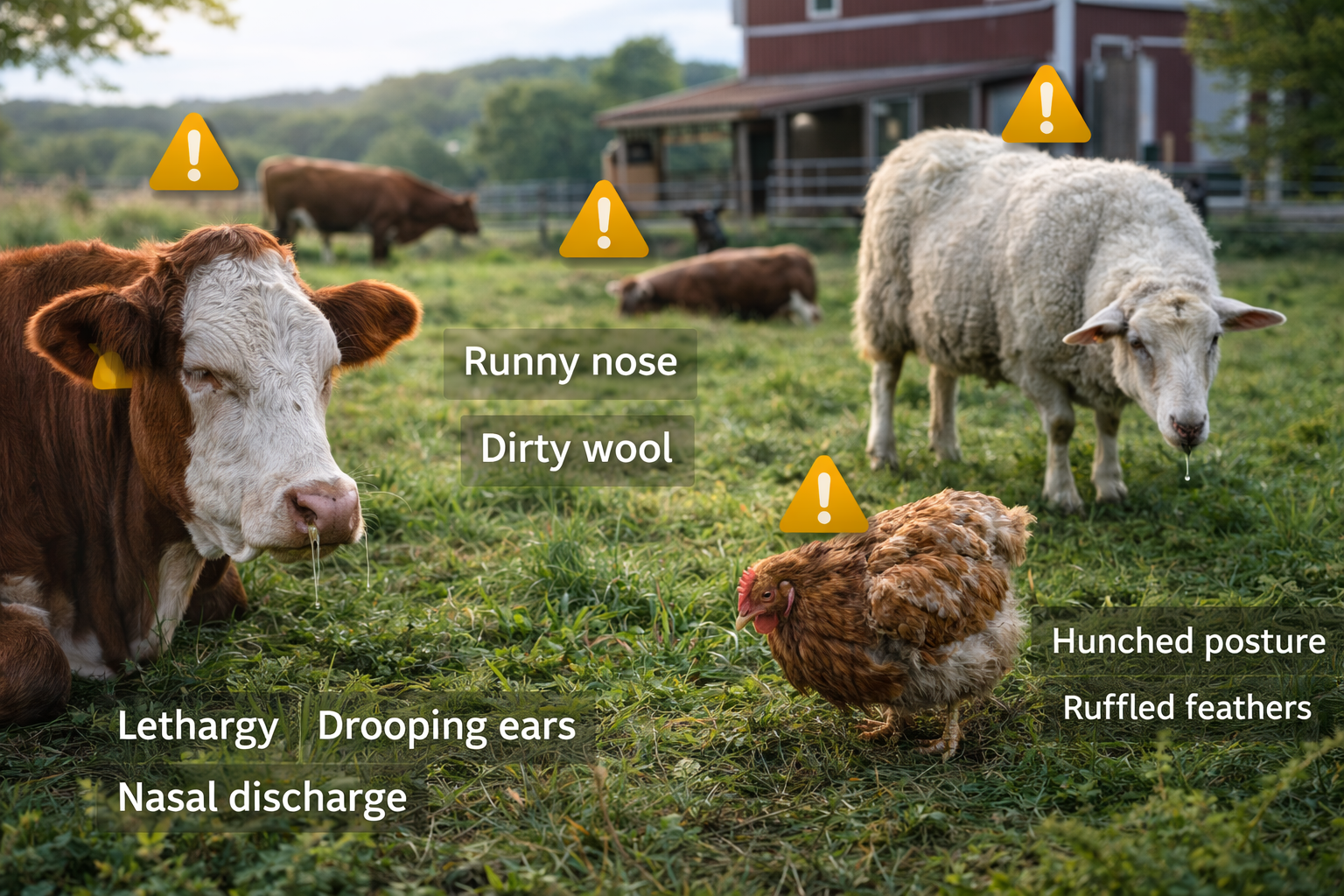
- Lethargy or lack of energy
- Isolation from the herd or flock
- Unusual aggression or irritability
- Restlessness or repeated pacing
Animals that suddenly act “different” are often signaling discomfort or pain.
3. Changes in Movement and Posture
How an animal stands, walks, or lies down can reveal early health issues.
Movement-Related Warning Signs:
- Limping or stiffness
- Reluctance to stand or move
- Hunched posture
- Repeated shifting of weight
Movement issues may point to injury, joint problems, hoof infections, or internal illness.
4. Abnormal Body Temperature and Breathing
Subtle physical changes can indicate infection or stress.
Signs to Observe:
- Fever or unusually low body temperature
- Rapid or labored breathing
- Excessive panting or coughing
- Nasal discharge
Respiratory changes often signal infections that worsen quickly if untreated.
5. Changes in Coat, Skin, or Feathers
External appearance often reflects internal health.
Visual Signs of Illness:
- Dull, rough, or patchy coat
- Hair or wool loss
- Excessive scratching or rubbing
- Skin sores, swelling, or redness
Poor coat condition can indicate parasites, nutritional deficiencies, or chronic illness.
6. Digestive Changes and Abnormal Waste
Manure and droppings are valuable health indicators.
Digestive Warning Signs:
- Diarrhea or unusually loose manure
- Constipation or reduced droppings
- Blood or mucus in waste
- Strong or unusual odors
Digestive problems can lead to dehydration, weakness, and rapid decline if ignored.
7. Eye, Nose, and Mouth Abnormalities
Healthy animals have bright eyes and clean facial features.
Signs of Concern:
- Cloudy or sunken eyes
- Discharge from eyes or nose
- Excessive drooling
- Bad breath or mouth sores
These symptoms may indicate infection, dental issues, or systemic illness.
8. Reduced Production or Performance
Illness often affects productivity before obvious symptoms appear.
Production Changes Include:
- Sudden drop in milk yield
- Reduced egg production
- Poor growth or weight gain
- Fertility problems
Monitoring production trends helps catch illness early.
9. Changes in Vocalization
Animals may vocalize differently when unwell.
- Excessive calling
- Unusual sounds
- Vocalizing when moving or lying down
These changes can indicate pain, distress, or discomfort.
10. Monitoring Herd or Flock Patterns
Sometimes illness is easier to spot by comparing animals.
- One animal lagging behind
- One animal consistently resting while others are active
- Uneven growth or appearance
Animals that stand out from the group often need closer inspection.
Daily Health Checks: A Simple Routine
A few minutes of daily observation can prevent major health problems.
Daily Check Routine:
- Observe feeding behavior
- Watch movement and posture
- Check water intake
- Look at coats, eyes, and manure
- Note any changes in behavior
Consistency helps you recognize what’s normal—and what’s not.
What to Do When You Notice Early Signs
When early signs of illness appear:
- Isolate the animal if necessary
- Monitor symptoms closely
- Check temperature and hydration
- Improve comfort and reduce stress
- Contact a veterinarian if symptoms persist or worsen
Quick action saves lives and limits disease spread.
Common Mistakes Farmers Should Avoid
- Ignoring subtle changes
- Waiting too long to act
- Treating without proper diagnosis
- Overlooking hygiene and biosecurity
Early attention is always better than emergency treatment.
Final Thoughts
Learning how to spot early signs of illness in farm animals is one of the most powerful tools a farmer has. Small changes in behavior, appetite, movement, or appearance often signal health issues long before they become severe. Daily observation, consistency, and quick response protect animal welfare, reduce losses, and support a healthier, more productive farm.
Healthy animals depend on attentive farmers—and early detection makes all the difference. 🐄🐐🐑


 Accessories & Others
 Apparel
 Beds & Furniture
 Cages & Accessories
 Carriers & Strollers
 Doors, Gates & Ramps
 Flea & Tick Control
 Grooming
 Litter & Housebreaking
 Memorials & Funerary
 Accessories & Others
 Apparel
 Beds & Furniture
 Cages & Accessories
 Carriers & Strollers
 Cat Doors,Steps, Nets.
 Collars, Harnesses & leashes
 Flea & Tick Control
 Grooming
 Cages& Accessories
 Cow Mastitis Detectors
 Ear Tags
 Aquarium Accessories
 Aquarium Cleaners
 Aquarium Decor
 Aquarium Lights
 Aquarium Pumps & Filter
 Aquariums & Fish Bowls
 Automatic Feeders