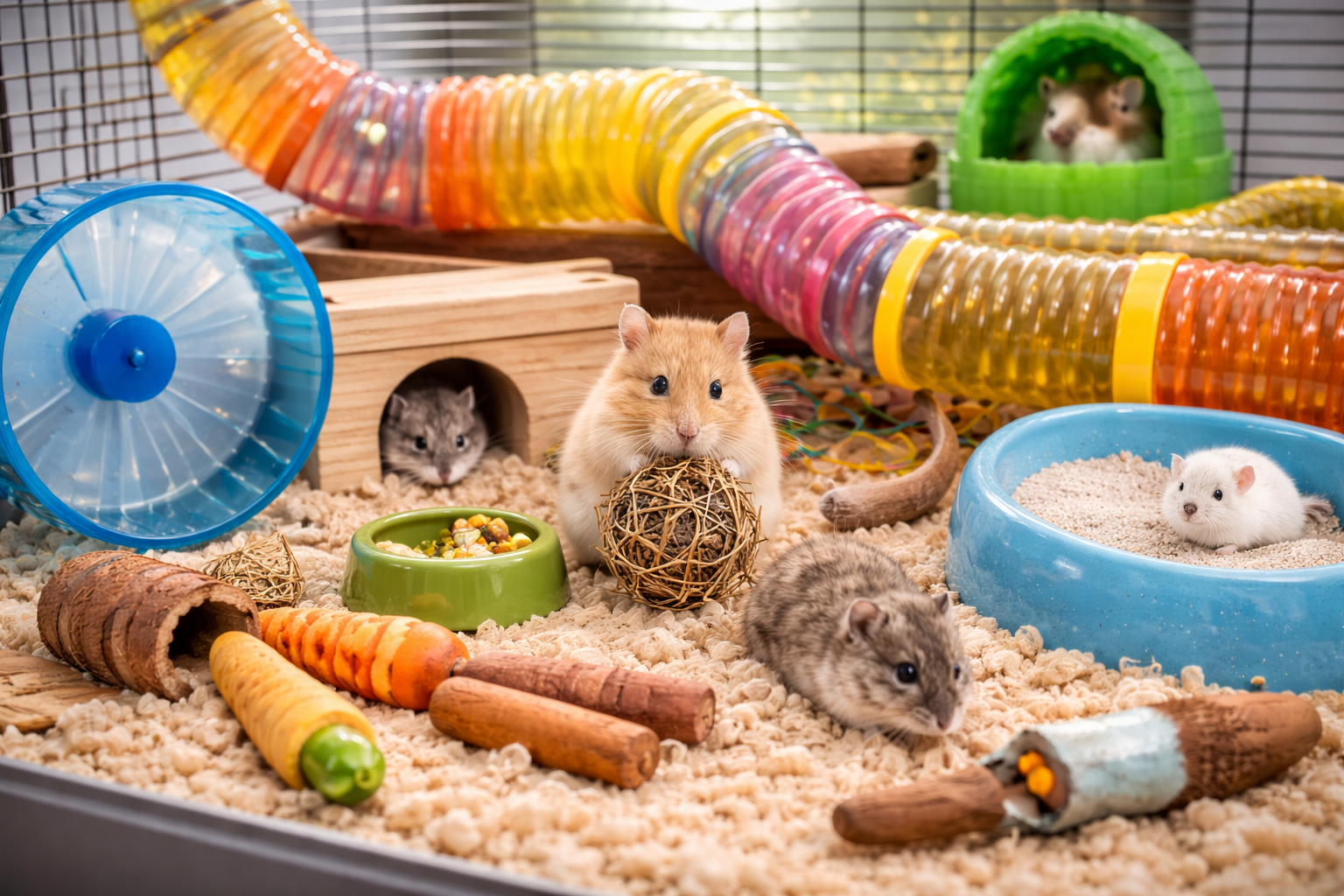
Caring for hamsters and small rodents is a rewarding experience, but creating the perfect environment requires more than just a cage and food. Accessories play a crucial role in keeping your little pets healthy, active, and entertained. The right setup prevents boredom, supports natural behaviors, and ensures overall well-being.
In this complete guide, we’ll explore must-have cage accessories for hamsters and small rodents, including bedding, toys, feeding essentials, and enrichment items that make life in captivity comfortable and stimulating.
1. Safe and Comfortable Bedding
Bedding forms the foundation of your pet’s cage. It provides comfort, absorbs waste, and allows for natural digging behaviors.
Best Bedding Options:
- Paper-based bedding: Soft, absorbent, and dust-free. Ideal for hamsters and gerbils.
- Aspen shavings: Natural and safe. Avoid cedar or pine, as these can harm small rodents’ respiratory systems.
- Hay: Can be used as bedding or nesting material.
Tip: Provide a deep layer (2–4 inches) to allow digging and burrowing, which is essential for mental and physical stimulation.
2. Hideouts and Nesting Spaces
Hamsters and rodents are naturally shy and need secure spaces to retreat.
Options Include:
- Wooden huts
- Ceramic hideaways
- Plastic igloos
- Tubes and tunnels
Benefits:
- Reduces stress
- Provides sleeping areas
- Encourages natural hiding behavior
Pro Tip: Multiple hiding spots in different cage areas can help shy or newly introduced pets feel safe.
3. Exercise Wheels
Small rodents are active and require daily exercise. Wheels are essential for maintaining a healthy weight and burning energy.
Choosing the Right Wheel:
- Size: Hamsters need wheels that match their breed (e.g., Syrian hamsters need larger wheels than dwarf hamsters).
- Solid surface: Avoid wheels with wire rungs, which can cause injuries.
- Quiet operation: Helps prevent disturbing household members.
Daily exercise improves mental health and reduces destructive behaviors.
4. Tunnels and Tubes
Hamsters, gerbils, and mice love exploring tunnels. These mimic their natural underground burrows and keep them entertained.
Types:
- Plastic tubes
- Cardboard tunnels
- Interconnected modular systems
Benefits:
- Stimulates exploration instincts
- Provides exercise and hiding opportunities
- Helps reduce stress and boredom
Rotate or change tunnel layouts periodically to maintain novelty.
5. Chew Toys and Gnawing Items
Rodents have continuously growing teeth. Chew toys help maintain healthy teeth while providing mental stimulation.
Recommended Chew Toys:
- Wooden chews (untreated, natural wood)
- Mineral chews or blocks
- Hard cardboard toys
Avoid toys with paint or toxic chemicals. Replace worn or broken items regularly to prevent injury.
6. Food Dishes and Water Bottles
Proper feeding accessories are essential for hygiene and convenience.
Essentials:
- Food dish: Heavy ceramic or stainless steel dishes prevent tipping.
- Water bottle: A hanging water bottle with a metal spout keeps water clean and prevents contamination.
Tip: Place water bottles at accessible heights for your rodent and check daily to ensure fresh water availability.
7. Climbing Structures and Platforms
Many rodents enjoy climbing. Platforms, ladders, and bridges provide both exercise and enrichment.
Benefits:
- Encourages natural climbing and jumping behavior
- Creates more vertical space in the cage
- Helps reduce stress
Wooden or safe plastic structures are ideal. Avoid sharp edges and small gaps that could trap tiny paws.
8. Nesting and Foraging Materials
Foraging activities stimulate natural instincts and prevent boredom.
Materials to Use:
- Soft hay or shredded paper for nesting
- Edible foraging treats hidden in tunnels or toys
- Small cardboard boxes or paper rolls
Pro Tip: Hide treats periodically to encourage your pet to explore, dig, and problem-solve.
9. Sand Baths (for Gerbils and Some Hamsters)
Sand baths are an excellent way for certain rodents to maintain clean fur. Fine dust-free sand or chinchilla sand allows your pet to roll and groom themselves naturally.
Benefits:
- Keeps fur clean and soft
- Reduces stress
- Provides mental stimulation
Place the sand bath in a separate section of the cage to avoid contamination with bedding.
10. Cage Flooring and Accessories
Even with bedding, additional floor accessories improve comfort.
Suggestions:
- Non-slip mats under exercise areas
- Small ramps or platforms for multi-level cages
- Soft pads in sleeping areas
These accessories enhance safety and enrich your pet’s environment.
Tips for Setting Up an Enriched Cage
- Layer accessories: Place toys, tunnels, and hideouts at different levels for exploration.
- Rotate toys: Introduce new toys or change layouts to keep your pet engaged.
- Maintain hygiene: Clean bedding and accessories regularly to prevent odors and illness.
- Balance activity and rest: Ensure some quiet areas for sleeping while providing active zones for exercise.
Common Mistakes to Avoid
- Using bedding that is dusty or toxic
- Overcrowding the cage with too many items
- Neglecting to replace chew toys and worn-out items
- Skipping regular cleaning of food and water accessories
Proper setup and maintenance are key to long-term health and happiness.
Final Thoughts
Caring for hamsters and small rodents requires thoughtful attention to their physical and mental needs. The right cage accessories — from bedding and hideouts to exercise wheels, tunnels, and chew toys — create a safe, stimulating, and comfortable environment.
By investing in high-quality, safe, and engaging accessories, you encourage natural behaviors, reduce boredom, and support your pet’s overall well-being. A well-enriched cage is not just a home; it’s a playground that keeps your small companion healthy, happy, and active every day.


 Accessories & Others
 Apparel
 Beds & Furniture
 Cages & Accessories
 Carriers & Strollers
 Doors, Gates & Ramps
 Flea & Tick Control
 Grooming
 Litter & Housebreaking
 Memorials & Funerary
 Accessories & Others
 Apparel
 Beds & Furniture
 Cages & Accessories
 Carriers & Strollers
 Cat Doors,Steps, Nets.
 Collars, Harnesses & leashes
 Flea & Tick Control
 Grooming
 Cages& Accessories
 Cow Mastitis Detectors
 Ear Tags
 Aquarium Accessories
 Aquarium Cleaners
 Aquarium Decor
 Aquarium Lights
 Aquarium Pumps & Filter
 Aquariums & Fish Bowls
 Automatic Feeders