Cats are known for grooming themselves, but that doesn’t mean they don’t need your help. Regular grooming keeps your cat’s coat healthy, reduces shedding, prevents matting, and supports overall hygiene. Whether you’re a new cat parent or looking to upgrade your care routine, having the right grooming tools makes the process easier and stress-free.
In this guide, we’ll explore the must-have grooming tools for cats and explain how each one contributes to your feline’s well-being.
Why Grooming Is Important for Cats
Even though cats spend hours licking their fur, self-grooming doesn’t replace proper care.
Regular grooming helps:
- Reduce hairballs
- Prevent painful mats
- Remove dirt and loose fur
- Detect skin issues early
- Strengthen your bond
Long-haired breeds especially require routine brushing, but short-haired cats benefit too.
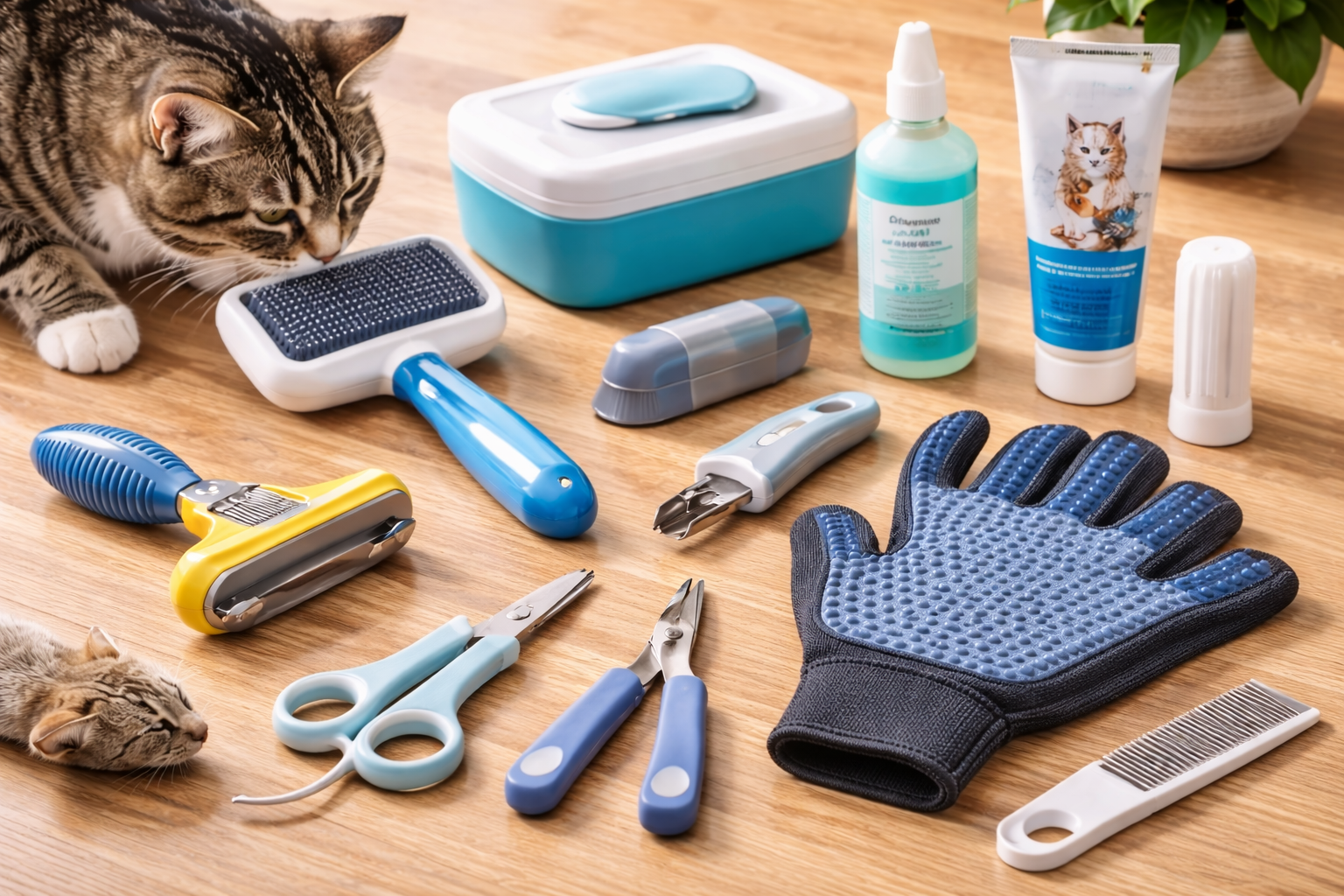
1. Slicker Brush
A slicker brush is one of the most versatile grooming tools.
Why It’s Essential
- Removes loose hair
- Prevents tangles
- Reaches undercoat layers
Look for soft, flexible bristles that won’t irritate sensitive skin. Use gentle strokes, especially around the belly and legs.
2. Deshedding Tool
Deshedding tools are designed to remove loose undercoat hair without cutting healthy fur.
Best For
- Heavy shedders
- Seasonal shedding periods
- Long-haired breeds
Use once or twice a week to significantly reduce fur around your home.
3. Grooming Glove
Some cats dislike brushes but enjoy petting. Grooming gloves combine both.
Benefits
- Mimics petting motion
- Removes loose hair
- Ideal for anxious cats
It’s a great starter tool for cats new to grooming.
4. Fine-Tooth Comb
A fine-tooth comb helps detect and remove small tangles, debris, or flea dirt.
When to Use
- After brushing
- Around delicate areas like the face
- Checking for parasites
It’s also useful for finishing touches after a brushing session.
5. Nail Clippers for Cats
Trimming your cat’s nails prevents scratching injuries and furniture damage.
What to Look For
- Small, sharp blades
- Comfortable grip
- Safety guard
Clip only the sharp tip and avoid the pink quick area. If unsure, ask your vet for a demonstration.
6. Cat-Safe Shampoo
Cats rarely need full baths, but occasional cleaning may be necessary.
When Bathing Is Needed
- Sticky or dirty fur
- Skin conditions
- Flea treatment
Always use cat-specific shampoo. Human products can irritate feline skin.
7. Ear Cleaning Solution
Cats’ ears should be checked regularly for dirt or wax buildup.
Signs of Ear Issues
- Head shaking
- Scratching ears
- Dark discharge
Use a vet-approved ear cleaning solution and cotton pad — never insert cotton swabs deep into the ear canal.
8. Pet Wipes
Pet wipes are convenient for quick cleanups.
Ideal For
- Wiping paws
- Cleaning around eyes
- Freshening up fur
Choose alcohol-free and fragrance-free options for safety.
9. Toothbrush & Cat Toothpaste
Dental health is often overlooked.
Why It Matters
- Prevents bad breath
- Reduces plaque buildup
- Supports long-term health
Use only toothpaste made specifically for cats. Even brushing once or twice weekly can make a difference.
10. Grooming Scissors (Optional)
For long-haired cats, blunt-tip grooming scissors can help trim small mats.
Important Note
Never cut close to the skin. If mats are severe, consult a professional groomer.
How Often Should You Groom Your Cat?
Grooming frequency depends on coat type.
Short-Haired Cats
Long-Haired Cats
- Brush daily or every other day
Nail Trimming
Ear Checks
Consistency prevents problems before they start.
Making Grooming Stress-Free
Some cats resist grooming at first. Here’s how to make it easier:
- Start young if possible
- Keep sessions short (5–10 minutes)
- Offer treats after grooming
- Use calm, gentle movements
- Choose quiet times of day
Positive reinforcement builds trust.
Signs Your Cat Needs Grooming Attention
Watch for these indicators:
- Excessive shedding
- Hairballs increasing
- Visible mats
- Scratching more than usual
- Dull coat appearance
Early action prevents bigger issues later.
Common Grooming Mistakes to Avoid
- Using human products
- Pulling on mats
- Cutting nails too short
- Skipping regular brushing
- Ignoring dental care
Proper tools and patience are key.
Building a Basic Cat Grooming Kit
Here’s a simple starter checklist:
- Slicker brush
- Fine-tooth comb
- Nail clippers
- Grooming gloves
- Pet wipes
- Ear cleaning solution
- Cat toothpaste
Keeping everything organized in one place makes grooming convenient.
Final Thoughts
Grooming isn’t just about appearance — it’s about health, comfort, and bonding. With the right tools and a consistent routine, you can prevent common issues like mats, excessive shedding, and nail overgrowth.
Start slow, stay patient, and make grooming a positive experience. Over time, many cats come to enjoy the extra attention.
A well-groomed cat is a happy, healthy companion — and a little regular care goes a long way. 🐾


 Accessories & Others
 Apparel
 Beds & Furniture
 Cages & Accessories
 Carriers & Strollers
 Doors, Gates & Ramps
 Flea & Tick Control
 Grooming
 Litter & Housebreaking
 Memorials & Funerary
 Accessories & Others
 Apparel
 Beds & Furniture
 Cages & Accessories
 Carriers & Strollers
 Cat Doors,Steps, Nets.
 Collars, Harnesses & leashes
 Flea & Tick Control
 Grooming
 Cages& Accessories
 Cow Mastitis Detectors
 Ear Tags
 Aquarium Accessories
 Aquarium Cleaners
 Aquarium Decor
 Aquarium Lights
 Aquarium Pumps & Filter
 Aquariums & Fish Bowls
 Automatic Feeders