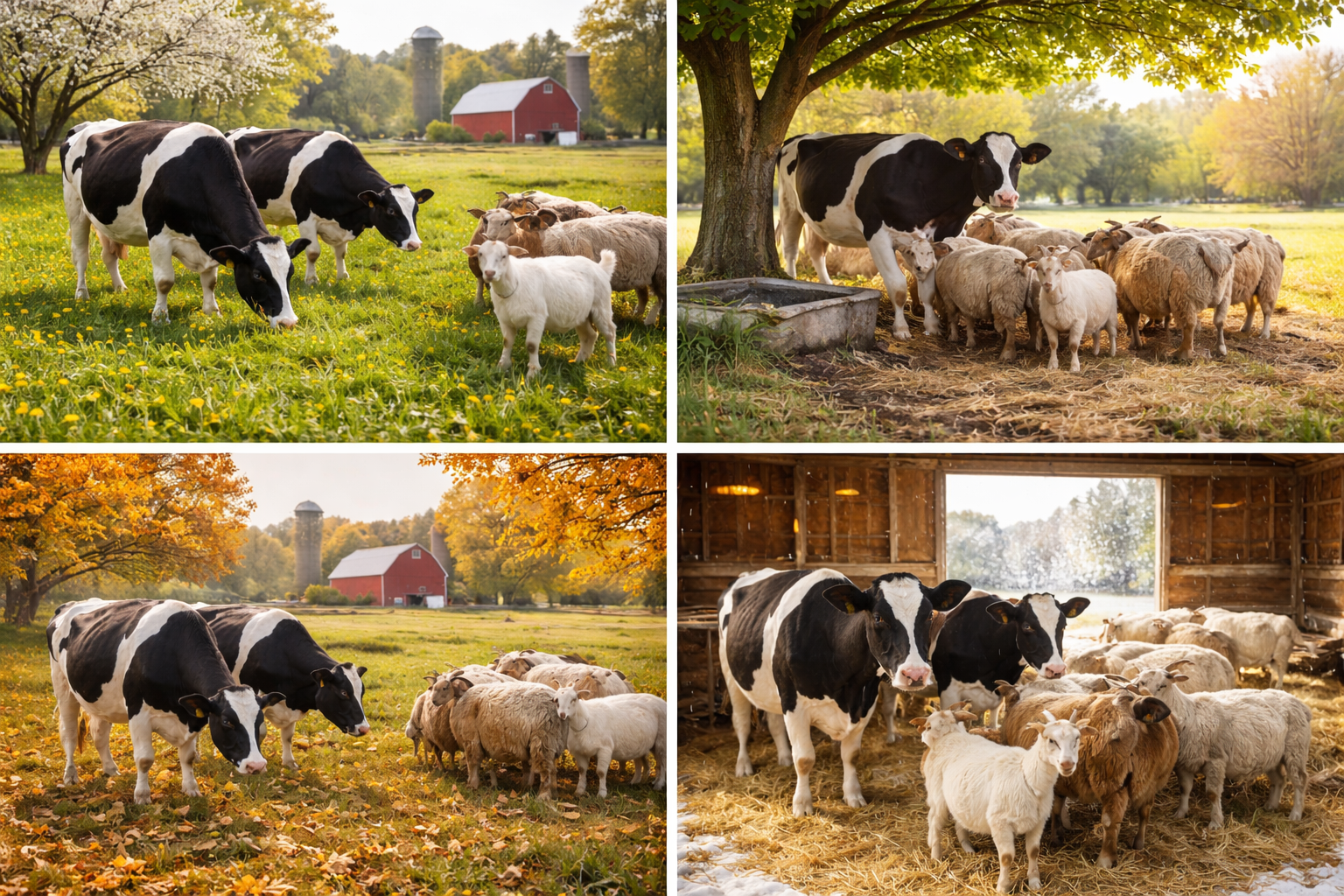
Farm animals face different challenges as the seasons change. Temperature shifts, weather extremes, and seasonal diseases can all impact animal health and productivity. Providing the right care at the right time of year helps animals stay comfortable, reduces stress, and prevents costly health issues.
This seasonal care guide for farm animals breaks down essential care practices for spring, summer, autumn, and winter, helping you maintain healthy livestock all year round.
Why Seasonal Care Matters
Farm animals naturally adapt to environmental changes, but modern farming conditions often limit their ability to cope without support. Seasonal care focuses on adjusting feeding, shelter, hygiene, and health management to meet animals’ changing needs.
Benefits of proper seasonal care include:
- Stronger immune systems
- Improved growth and productivity
- Lower disease and parasite risk
- Better animal comfort and welfare
Planning ahead for each season ensures smoother farm operations and healthier animals.
Spring Care for Farm Animals
Spring is a time of renewal but also presents challenges such as wet conditions and rising parasite activity.
Key Spring Care Tips:
- Gradual diet changes: Slowly introduce fresh pasture to avoid digestive upset
- Parasite control: Deworm animals and monitor for ticks and flies
- Hoof and foot care: Wet ground increases the risk of foot rot and infections
- Shelter maintenance: Repair winter damage and improve drainage
Spring is also a common breeding and birthing season, so close monitoring of pregnant animals is essential.
Summer Care for Farm Animals
Summer heat can cause stress, dehydration, and reduced productivity if not managed properly.
Essential Summer Care Practices:
- Provide shade: Trees, shelters, or shade cloth reduce heat stress
- Ensure constant water access: Animals drink significantly more during hot weather
- Improve ventilation: Open shelters and airflow help regulate body temperature
- Adjust feeding times: Offer feed early morning or evening to encourage intake
Watch for signs of heat stress such as panting, lethargy, or reduced appetite, and respond quickly.
Autumn Care for Farm Animals
Autumn is a transition period and a crucial time for preparation.
Autumn Management Tips:
- Boost nutrition: Improve body condition before winter
- Pasture management: Rotate grazing and prevent overgrazing
- Health checks: Vaccinate and treat parasites before cold weather
- Shelter preparation: Repair roofs, fencing, and wind barriers
Autumn preparation reduces winter stress and helps animals maintain body weight during colder months.
Winter Care for Farm Animals
Winter presents the greatest challenges, including cold stress, limited forage, and damp conditions.
Winter Care Essentials:
- Provide dry, draft-free shelter: Protect animals from wind, rain, and snow
- Increase energy intake: Animals burn more calories to stay warm
- Maintain dry bedding: Wet bedding increases disease risk
- Prevent frozen water: Use insulated or heated water systems
Regularly check animals for signs of weight loss, frostbite, or respiratory illness during winter.
Feeding Adjustments Throughout the Year
Nutrition should change with the seasons.
- Spring & Summer: Fresh pasture, mineral supplements, and hydration
- Autumn: Higher-quality forage and gradual feed increases
- Winter: Hay, silage, and energy-rich feeds
Always introduce dietary changes gradually to protect rumen health.
Seasonal Health and Disease Prevention
Different seasons bring different health risks.
- Spring: Parasites and foot infections
- Summer: Heat stress, flies, and dehydration
- Autumn: Respiratory illnesses and nutritional deficiencies
- Winter: Pneumonia, frostbite, and weakened immunity
Routine observation and preventive care reduce seasonal disease outbreaks.
Housing and Hygiene Across Seasons
Clean housing is essential year-round but requires seasonal adjustments.
- Improve drainage in wet seasons
- Increase ventilation in summer
- Add insulation and bedding in winter
- Clean shelters regularly to reduce bacteria and parasites
Good hygiene supports animal health regardless of the season.
Managing Stress During Seasonal Changes
Sudden environmental changes can stress animals.
Stress-Reduction Tips:
- Maintain consistent routines
- Avoid sudden diet changes
- Handle animals calmly
- Provide adequate space and shelter
Low-stress animals are healthier and more productive.
Final Thoughts
Seasonal care is a cornerstone of responsible livestock management. By understanding how each season affects farm animals and adjusting care accordingly, farmers can prevent health issues, reduce stress, and improve productivity year-round.
From spring pasture management to winter shelter protection, thoughtful seasonal planning ensures your animals stay healthy, comfortable, and resilient in every condition. A well-prepared farm is a successful farm—no matter the season. 🌱☀️🍂❄️