Reptiles are masters at hiding discomfort. In the wild, showing weakness makes them vulnerable to predators—so even captive reptiles often mask stress and illness until problems become serious. For owners, this means early detection is critical.
Understanding the warning signs of stress or poor health can help you intervene early, adjust care conditions, and prevent long-term damage. This guide covers the most common behavioral and physical signs that your reptile may be stressed or unhealthy, along with what those signs usually mean.
Why Reptile Stress Is So Dangerous
Stress weakens a reptile’s immune system, making it far more susceptible to disease. Chronic stress can lead to:
- Appetite loss
- Poor digestion
- Increased parasite loads
- Respiratory infections
- Shortened lifespan
In most cases, stress is caused by environmental issues, not the reptile itself.
Behavioral Signs of Stress in Reptiles
Behavior is often the first indicator that something isn’t right.
1. Hiding Excessively
While hiding is natural, constant hiding—especially during normal active hours—can signal stress.
Possible causes:
- Incorrect temperatures
- Improper lighting
- Lack of secure hides
- Excessive handling
If your reptile never emerges, it’s time to review enclosure conditions.
2. Aggression or Defensive Behavior
Sudden aggression in normally calm reptiles is a red flag.
Signs include:
- Hissing or lunging
- Biting attempts
- Tail whipping
- Puffing or flattening the body
Stress-related aggression is often linked to improper handling, overcrowding, or habitat disruption.
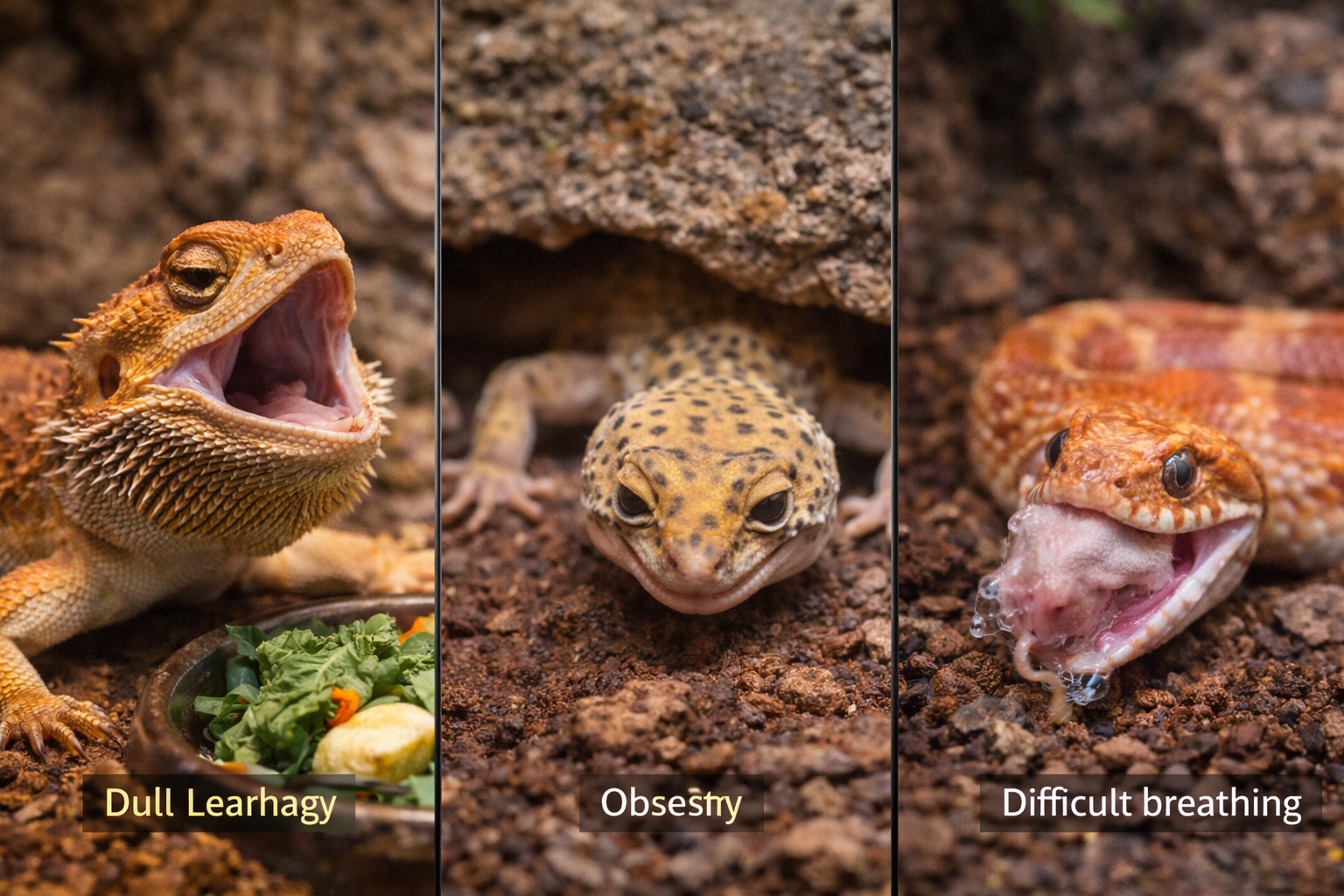
3. Lethargy or Inactivity
A healthy reptile should show regular movement and alertness during its active period.
Lethargy may indicate:
- Low temperatures
- Poor nutrition
- Dehydration
- Illness
Always check environmental conditions first before assuming disease.
4. Restlessness or Glass Surfing
Repeated pacing or clawing at enclosure walls is a common stress behavior.
This often results from:
- Enclosure too small
- Incorrect temperature gradient
- Visual stress from reflections
- Desire to escape poor conditions
Persistent restlessness should never be ignored.
Appetite and Feeding Warning Signs
Changes in eating habits are one of the strongest indicators of stress or illness.
5. Loss of Appetite
Temporary fasting can be normal, but prolonged refusal to eat is concerning.
Possible causes:
- Incorrect temperatures
- Stress from enclosure changes
- Improper diet
- Illness or parasites
Track feeding behavior closely and note duration.
6. Sudden Overeating or Obesity
Stress doesn’t always cause appetite loss—some reptiles overeat when conditions are unbalanced.
This can lead to:
- Fatty liver disease
- Reduced mobility
- Shortened lifespan
Balanced feeding schedules are essential.
Physical Signs of an Unhealthy Reptile
Visual changes often appear later, making them especially serious.
7. Weight Loss or Visible Bones
Sudden or gradual weight loss can indicate:
- Internal parasites
- Poor nutrition
- Chronic stress
- Digestive issues
Healthy reptiles maintain consistent body condition.
8. Abnormal Shedding
Shedding problems are a major indicator of poor husbandry.
Warning signs include:
- Retained skin on toes or tail
- Patchy or incomplete sheds
- Frequent shedding without growth
Humidity and hydration issues are often the cause.
9. Sunken or Dull Eyes
Healthy reptiles have clear, alert eyes.
Sunken or cloudy eyes may signal:
- Dehydration
- Infection
- Vitamin deficiencies
This symptom requires immediate attention.
10. Changes in Skin Color or Texture
Watch for:
- Darkened coloration
- Pale or blotchy patches
- Sores or lesions
Discoloration often reflects stress, temperature imbalance, or disease.
Respiratory and Movement Red Flags
11. Labored Breathing or Wheezing
Respiratory distress is serious and often life-threatening.
Signs include:
- Open-mouth breathing
- Bubbling around nostrils
- Clicking or wheezing sounds
This often results from incorrect humidity or low temperatures.
12. Weakness or Tremors
Shaking limbs or difficulty moving may indicate:
- Calcium deficiency
- Lack of UVB lighting
- Advanced illness
This is a medical emergency and requires veterinary care.
Environmental Causes of Stress
Many health issues trace back to enclosure problems.
Common environmental stressors:
- Incorrect temperatures
- Improper UVB lighting
- Poor humidity control
- Dirty enclosures
- Overhandling
Fixing husbandry issues often resolves early symptoms quickly.
When to See a Veterinarian
Seek professional help if:
- Symptoms persist despite corrections
- Weight loss continues
- Breathing issues appear
- Neurological symptoms occur
Always choose a veterinarian experienced with exotic animals.
How to Reduce Stress in Reptiles
Preventative steps include:
- Stable temperature gradients
- Proper UVB lighting
- Consistent feeding routines
- Minimal handling
- Quiet, low-traffic enclosure placement
Routine observation is your most powerful tool.
Final Thoughts
Reptiles rarely show obvious signs of distress until something is seriously wrong. By learning to recognize subtle behavioral and physical changes, you give yourself the opportunity to act early—often preventing severe illness or costly treatments.
A calm, alert reptile with a steady appetite is usually a healthy one. When something feels “off,” trust your instincts, review your setup, and don’t hesitate to seek expert help. Your reptile’s health depends on your attention and care.


 Accessories & Others
 Apparel
 Beds & Furniture
 Cages & Accessories
 Carriers & Strollers
 Doors, Gates & Ramps
 Flea & Tick Control
 Grooming
 Litter & Housebreaking
 Memorials & Funerary
 Accessories & Others
 Apparel
 Beds & Furniture
 Cages & Accessories
 Carriers & Strollers
 Cat Doors,Steps, Nets.
 Collars, Harnesses & leashes
 Flea & Tick Control
 Grooming
 Cages& Accessories
 Cow Mastitis Detectors
 Ear Tags
 Aquarium Accessories
 Aquarium Cleaners
 Aquarium Decor
 Aquarium Lights
 Aquarium Pumps & Filter
 Aquariums & Fish Bowls
 Automatic Feeders