Bringing home a new puppy is one of life’s greatest joys—but teething and early training can be challenging. Just like human babies, puppies explore the world with their mouths. That means chewing, biting, and mouthing are all normal developmental behaviors. The right toys can not only soothe sore gums during teething, but also support training, mental growth, and positive habits.
In this complete guide, we’ll explore the top puppy toys for teething and training, why they matter, how to choose them safely, and tips to make playtime both fun and educational.
Why Puppy Toys Matter
Before diving into specific products, it’s important to understand why toys are so essential during the early months:
✔ Teething Relief
Puppies start teething around 3–4 months old as baby teeth fall out and adult teeth erupt. Chewing helps relieve pain and pressure.
✔ Behavior Control
Puppies have lots of energy. Toys help channel chewing and biting into acceptable targets—saving your shoes, hands, and furniture!
✔ Training & Learning
Many toys encourage interaction, focus, and problem-solving, which makes them perfect for early obedience and mental stimulation.
✔ Bonding with You
Interactive toys help strengthen your bond through play, rewards, and shared experiences.
What to Look for in Puppy Toys
Not all toys are equally safe or effective. Here’s how to choose the best ones:
✔ Safe Materials
Look for non-toxic rubber or fabric. Avoid small parts and hard plastics that can break off.
✔ Appropriate Size
Too small = choking hazard. Too big = hard to chew or carry. Match to your puppy’s breed and age.
✔ Texture Variety
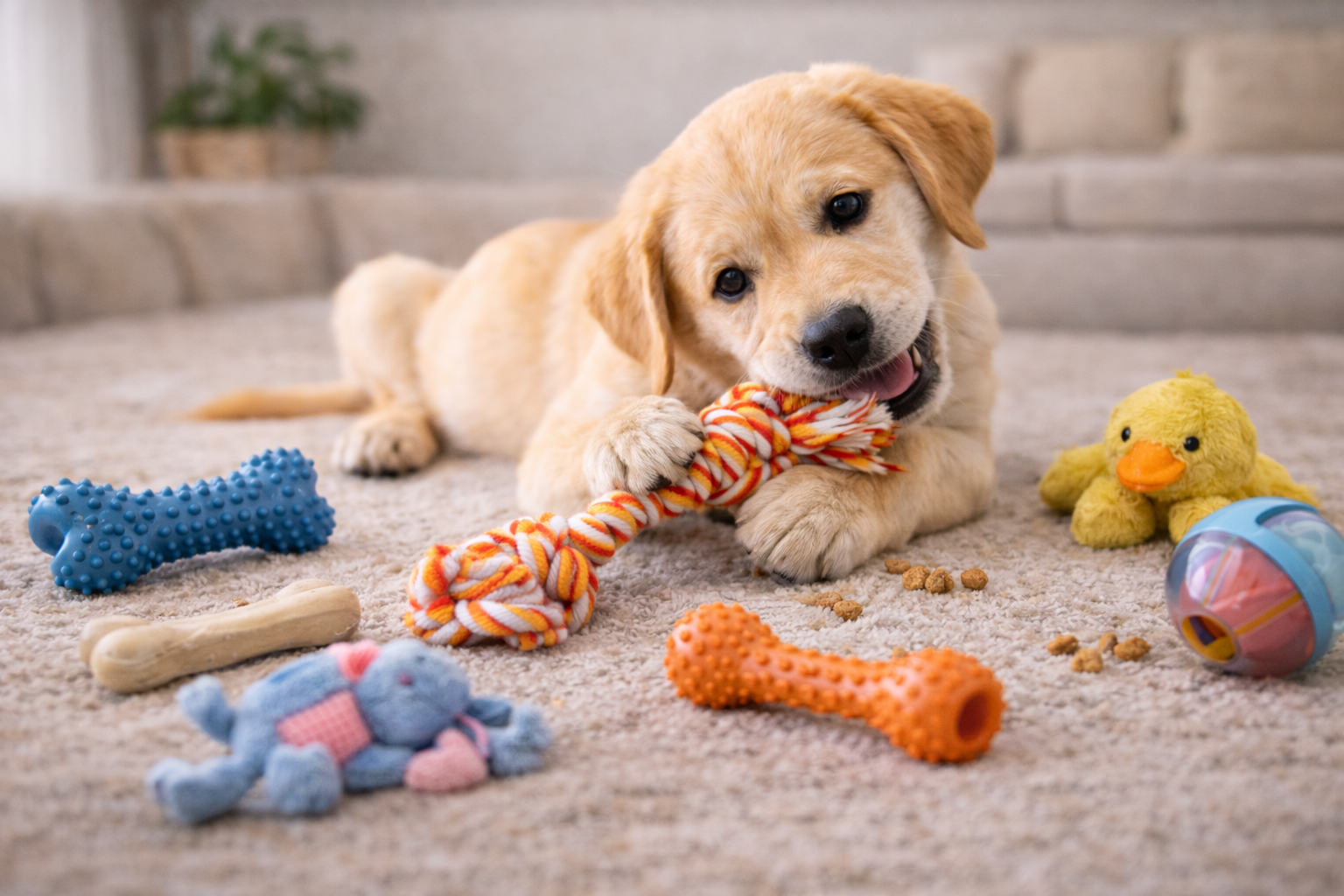
Different textures (soft plush, ridged rubber, knotted rope) provide varied chewing experiences and keep puppies engaged.
✔ Purposeful Design
Some toys are best for chewing, others for mental challenge or obedience training. Choose based on your goal.
1) Teething Toys — Soothing Sore Gums
Teething toys are typically softer, flexible, and gentle on young teeth.
Rubber Teething Toys
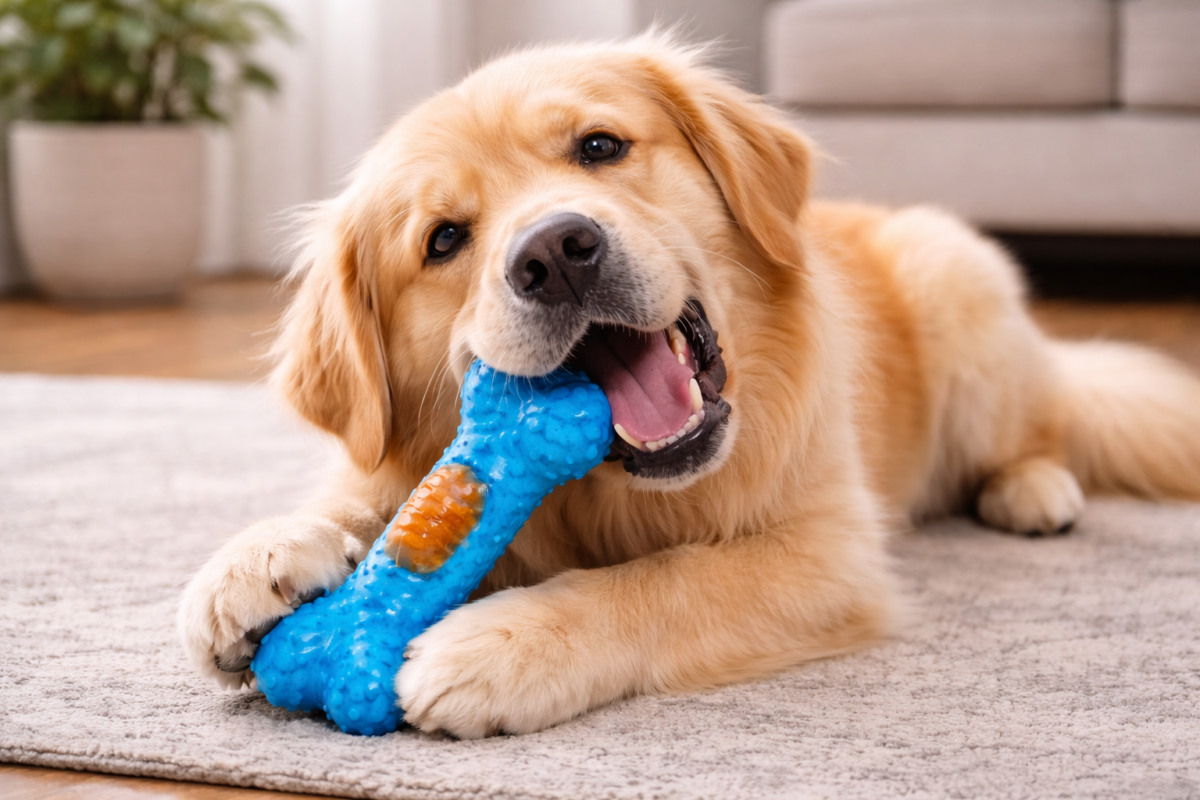
Examples: Rubber bones, knobby rings, teething sticks
Why they’re great:
- Flexible and gentle on gums
- Chewable size for puppy mouths
- Can be chilled for extra soothing
Teething Tip: Placing a rubber toy in the fridge (not freezer) for 10–15 minutes can help calm inflamed gums.
Soft Plush Toys
Examples: Plush animals with squeakers
Why puppies love them:
- Easy to carry
- Cozy texture
- Great for cuddling and gentle chewing
Caution: Supervise play. Remove the toy if stuffing or small parts come loose.
Rope Toys (Small Sizes)
Examples: Cotton knotted ropes
Why they help:
- Great for teething
- Helps floss emerging teeth
- Encourages gentle tug play
Always check for fraying; remove if threads become too loose.
2) Training Toys — Fun and Functional
Beyond chewing, puppies benefit from toys that teach skills and focus.
Interactive Puzzle Toys
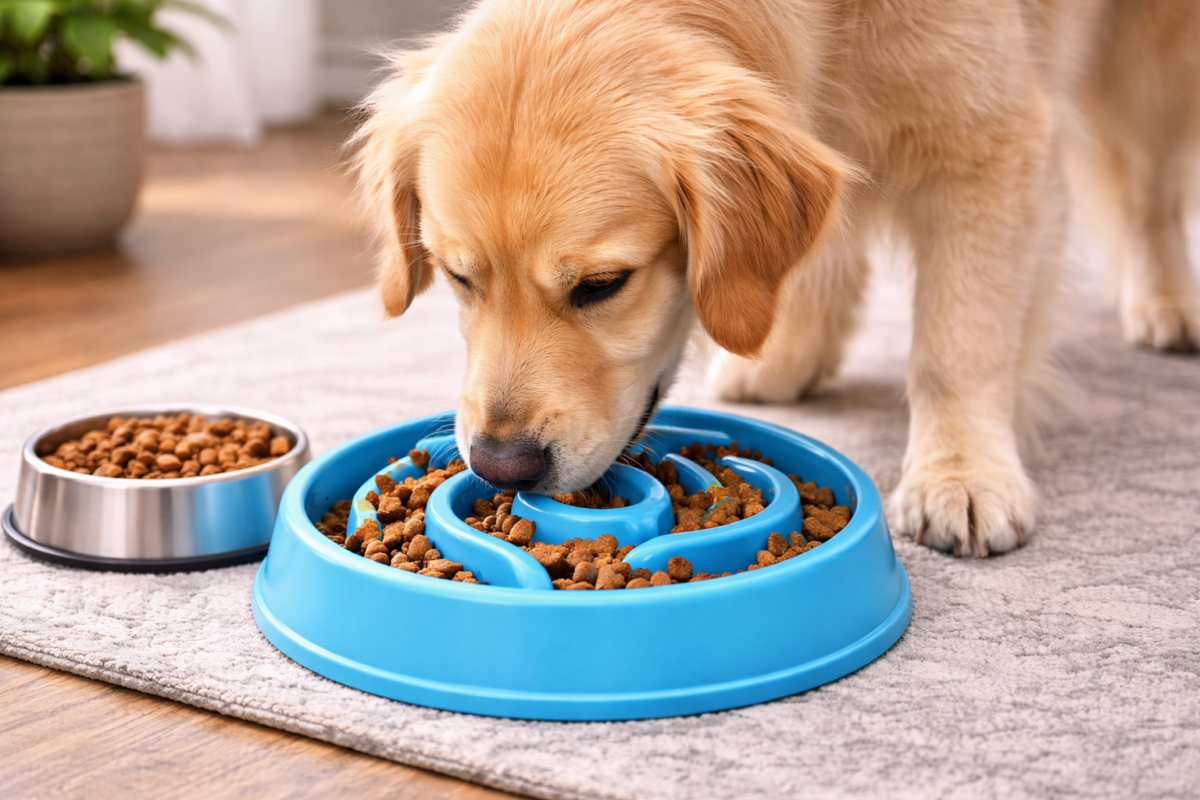
These hide treats and make puppies use their noses and brains to solve problems.
Benefits:
- Encourages focus and patience
- Promotes slow feeding (good for energetic eaters)
Start with simpler puzzles and increase difficulty over time.
Treat-Dispensing Balls
These roll, wobble, and drop kibble or treats as they move.
Benefits:
- Combines play with reward
- Great for high-energy puppies with extra enthusiasm
Use during short supervised sessions to keep engagement positive.
3) Fetch & Tug Toys — Physical Playtime
Soft Fetch Toys (Foam or Rubber)
Great for outdoor play and early obedience training.
Why they’re good:
- Encourages recall and movement
- Light and safe for puppy teeth
Small Tug Ropes
Use for gentle tug games that teach impulse control and release commands.
Training Tip: Always teach “drop it” and “take it” while playing tug so your pup stays responsive.
Safety Tips for Puppy Toys
Using toys effectively requires a bit of caution and supervision:
✔ Inspect toys regularly for tears, loose parts, or fraying
✔ Rotate toys to keep novelty and interest high
✔ Supervise play sessions, especially with ropes and plush toys
✔ Size appropriately so toys aren’t swallowed or stuck
A worn-out toy is more dangerous than no toy at all—replace as soon as damage appears.
How to Encourage Good Toy Habits
Whether it’s teething or training, the way you introduce toys matters:
1. Positive Reinforcement
When your puppy mouths a toy instead of your hand, praise and offer treats.
This builds good association.
2. Short Play Sessions
Young puppies have short attention spans. 5–10 minute bursts of play are more effective than long vigils.
3. Teach Toy Names
Say the toy’s name during play (“Fetch the blue bone!”). Soon your puppy learns to associate words with objects—a great foundation for obedience.
Age-Specific Toy Suggestions
8–12 Weeks: Soft plush, small rubber toys, light ropes
3–6 Months: Teething rings, puzzle toys, treat dispensers
6–9 Months: Fetch toys, durable chew toys, medium puzzle challenges
Matching toys to developmental stages keeps puppies engaged and learning.


 Accessories & Others
 Apparel
 Beds & Furniture
 Cages & Accessories
 Carriers & Strollers
 Doors, Gates & Ramps
 Flea & Tick Control
 Grooming
 Litter & Housebreaking
 Memorials & Funerary
 Accessories & Others
 Apparel
 Beds & Furniture
 Cages & Accessories
 Carriers & Strollers
 Cat Doors,Steps, Nets.
 Collars, Harnesses & leashes
 Flea & Tick Control
 Grooming
 Cages& Accessories
 Cow Mastitis Detectors
 Ear Tags
 Aquarium Accessories
 Aquarium Cleaners
 Aquarium Decor
 Aquarium Lights
 Aquarium Pumps & Filter
 Aquariums & Fish Bowls
 Automatic Feeders