UVB lighting is one of the most critical—and most misunderstood—elements of reptile care. Many health issues seen in captive reptiles don’t come from poor food or genetics, but from inadequate lighting. Without proper UVB exposure, even a well-fed reptile can slowly develop serious, irreversible health problems.
In this guide, we’ll break down what UVB lighting is, why reptiles need it, which reptiles require it most, and how to set it up correctly so your reptile can thrive in captivity.
What Is UVB Lighting?
UVB is a specific wavelength of ultraviolet light naturally produced by the sun. In the wild, reptiles absorb UVB when they bask outdoors. In captivity, UVB lighting replaces that missing sunlight.
UVB lighting allows reptiles to:
- Produce vitamin D₃ in their skin
- Absorb and use dietary calcium
- Maintain strong bones and muscles
- Support immune and metabolic health
Without UVB, these processes simply don’t function properly.
Why UVB Is Essential for Reptiles
Calcium Absorption and Bone Health
Calcium alone is useless without vitamin D₃. UVB exposure triggers the natural production of D₃, which allows calcium to be absorbed from food and used by the body.
Without UVB, reptiles may develop:
- Weak or soft bones
- Deformed limbs or jaws
- Tremors or paralysis
- Metabolic bone disease (MBD)
MBD is one of the most common and preventable reptile illnesses.
Muscle Function and Movement
Calcium also plays a major role in muscle contraction. Reptiles lacking UVB may show:
- Weak grip strength
- Difficulty walking or climbing
- Trembling limbs
These signs often appear before visible bone deformities.
Appetite, Digestion, and Growth
Reptiles with proper UVB exposure tend to:
- Eat more consistently
- Digest food more efficiently
- Grow at a healthy, steady rate
Poor UVB often leads to lethargy and appetite loss.
Which Reptiles Need UVB Lighting?
Reptiles That Require UVB
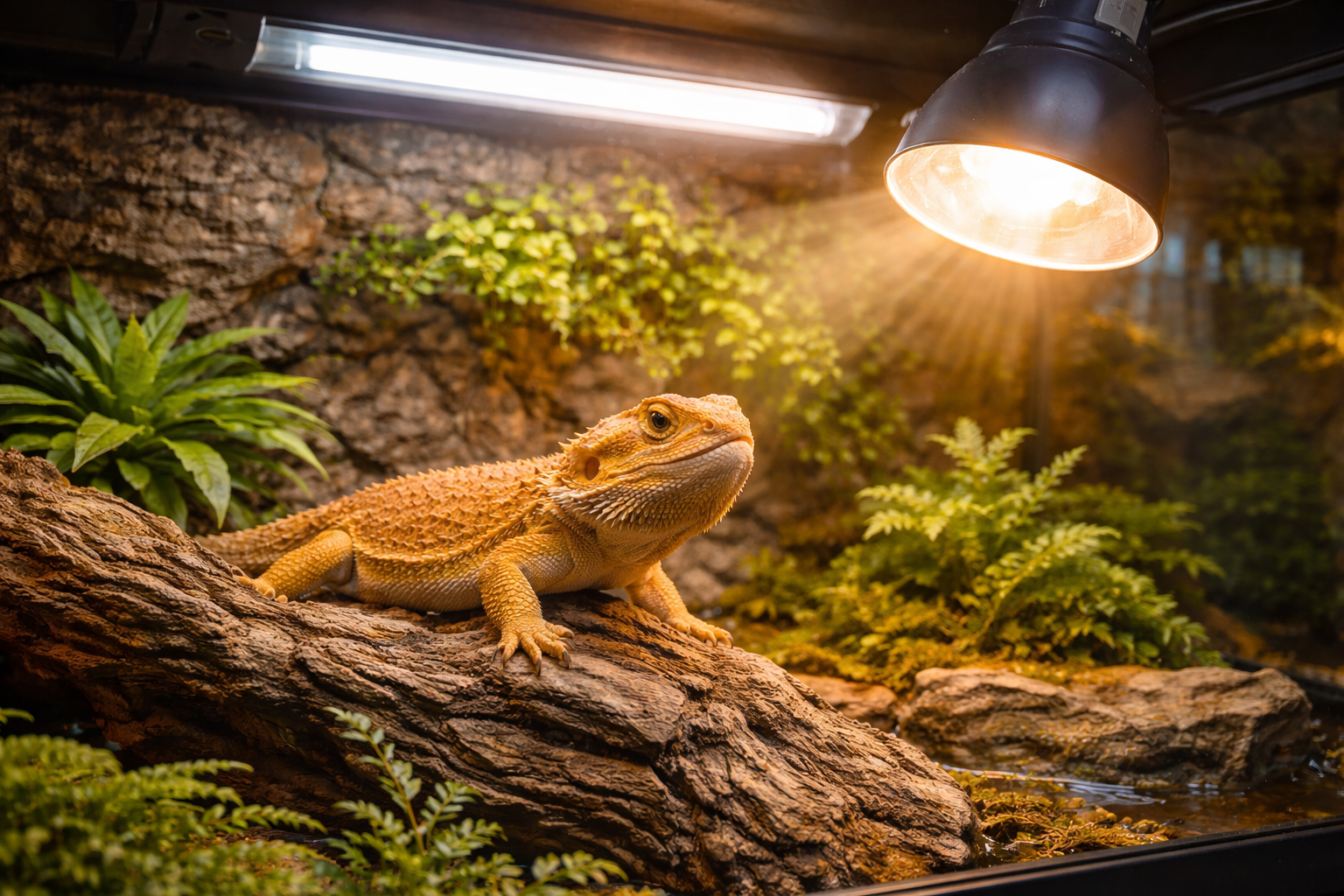
Most diurnal (day-active) reptiles need UVB, including:
- Bearded dragons
- Iguanas
- Uromastyx
- Tortoises
- Many lizards
For these species, UVB is non-negotiable.
Reptiles With Lower UVB Needs
Some reptiles are nocturnal or crepuscular and need lower levels:
- Leopard geckos
- Crested geckos
- Some snakes
Even for these species, low-level or indirect UVB is still beneficial, especially for long-term health.
Amphibians and UVB
Many amphibians require:
- Very low UVB levels
- Indirect exposure
- Careful placement to avoid overexposure
UVB needs vary greatly, so species research is essential.
Types of UVB Bulbs Explained
Compact UVB Bulbs
Pros:
- Small and affordable
- Easy to install
Cons:
- Limited coverage
- Uneven UVB distribution
Best for small enclosures or temporary setups.
Linear UVB Tubes (Recommended)
Pros:
- Even UVB spread
- Covers larger enclosures
- More natural exposure
Cons:
- Higher cost
- Requires proper fixture
Linear UVB tubes are the gold standard for most reptiles.
Mercury Vapor Bulbs
Pros:
- Provide heat and UVB together
Cons:
- Harder to regulate
- Not suitable for all enclosures
Best used by experienced keepers.
Choosing the Right UVB Strength
UVB strength is measured as a percentage (e.g., 5%, 10%, 12%).
General guidelines:
- Tropical species: lower UVB
- Desert species: higher UVB
- Taller enclosures: stronger UVB
Distance from the basking area matters just as much as bulb strength.
Proper UVB Placement
Correct placement is critical.
Key rules:
- UVB should overlap the basking area
- No glass or plastic between bulb and reptile
- Maintain correct distance from basking spot
Glass blocks UVB completely, rendering the bulb useless.
How Long Should UVB Lights Be On?
Reptiles need a consistent day/night cycle.
Recommended:
- 10–14 hours of UVB per day
- Complete darkness at night
- Use timers for consistency
Irregular lighting causes stress and hormonal disruption.
UVB Bulb Replacement: A Hidden Danger
UVB bulbs lose effectiveness long before they burn out.
Replacement schedule:
- Every 6–12 months (depending on bulb type)
- Track installation dates
- Clean dust from fixtures regularly
Old UVB bulbs are a silent cause of deficiency.
Common UVB Mistakes to Avoid
New keepers often make these errors:
- No UVB at all
- Incorrect bulb strength
- Bulb too far away
- Glass blocking UVB
- Never replacing bulbs
Even one of these mistakes can cause long-term damage.
Signs Your Reptile Isn’t Getting Enough UVB
Watch for:
- Lethargy
- Poor appetite
- Soft jaw or bones
- Tremors or weakness
- Abnormal posture
These symptoms require immediate attention.
Can Supplements Replace UVB?
Short answer: No.
While calcium and vitamin supplements help, they do not replace natural UVB-driven vitamin D₃ production. UVB lighting and supplements work together—not separately.
Final Thoughts
UVB lighting isn’t optional décor—it’s a lifesaving necessity for most reptiles. Proper UVB exposure supports strong bones, healthy digestion, normal movement, and long-term vitality.
When UVB lighting is done correctly, reptiles:
- Grow stronger
- Eat better
- Behave more naturally
- Live longer, healthier lives
If there’s one piece of equipment you should never compromise on, it’s UVB lighting. Get it right from the start, and your reptile will thank you with years of good health.


 Accessories & Others
 Apparel
 Beds & Furniture
 Cages & Accessories
 Carriers & Strollers
 Doors, Gates & Ramps
 Flea & Tick Control
 Grooming
 Litter & Housebreaking
 Memorials & Funerary
 Accessories & Others
 Apparel
 Beds & Furniture
 Cages & Accessories
 Carriers & Strollers
 Cat Doors,Steps, Nets.
 Collars, Harnesses & leashes
 Flea & Tick Control
 Grooming
 Cages& Accessories
 Cow Mastitis Detectors
 Ear Tags
 Aquarium Accessories
 Aquarium Cleaners
 Aquarium Decor
 Aquarium Lights
 Aquarium Pumps & Filter
 Aquariums & Fish Bowls
 Automatic Feeders